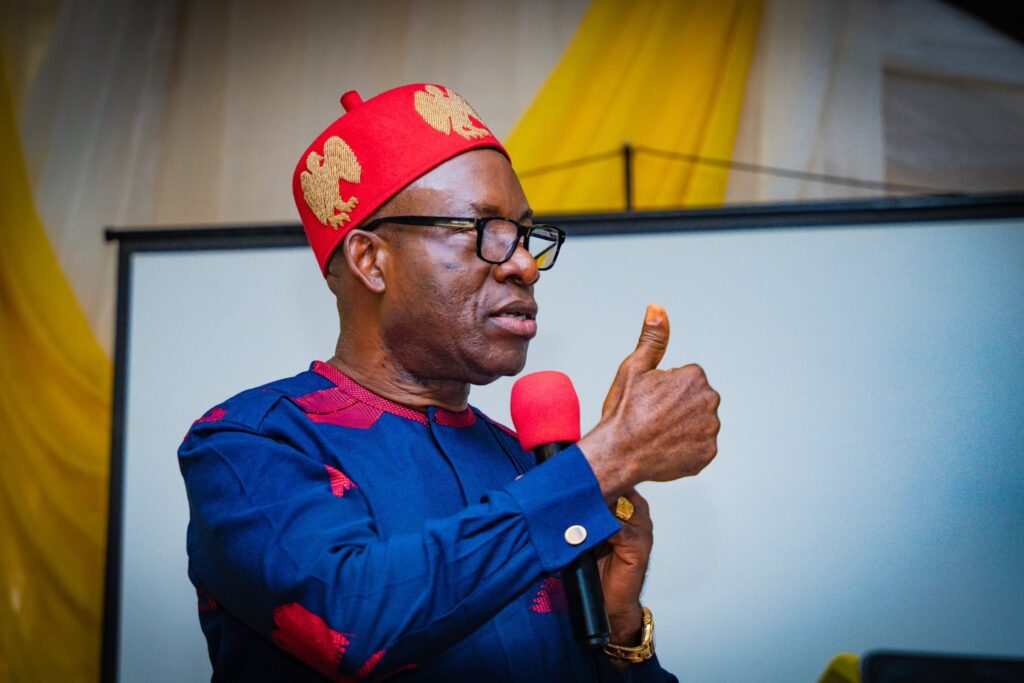
The banking revolution of 2004-2005 led by Charles Soludo, is one of the most dramatic and consequential events in the modern history of Nigeria. It has it all: the unwavering determination of one man, death threats, political sabotage, institutional resistance and the goodwill of a president.
By Joshua I. Mokwuah | September 14, 2026
A System in Crisis
Systemic fragility defined Nigeria’s banking landscape in the late 1990s and early 2000s. The era was defined by weak institutions that were struggling to survive. Many banks were undercapitalized, plagued by mismanagement and failed regularly. Among the most striking examples was Savannah Bank. Once ranked among the top ten financial institutions in Nigeria, it had grown to 140 branches. Yet in February 2002, the CBN abruptly revoked its license.
The CBN accused Savannah of insolvency and failing to meet its obligations. The aftermath saw it liquidated by the NDIC. The CBN’s license revocation left depositors stranded. It triggered a seven-year legal battle that ended with Savannah Bank’s license restoration in 2009. However, by that time, the banking industry had undergone a dramatic transformation. Savannah Bank could no longer reclaim its former position.
But Savannah wasn’t an isolated case. Numerous Nigerian banks, like All State Trust Bank, Bank of the North, Ganji Bank, all crumbled under poor governance, insider abuses, and soaring non‑performing loans. The industry had become a ticking time bomb. Repeated government bailouts masked deeper rots: loans to the private sector were meagre, capital bases were weak and risk governance was almost non‑existent. Nigerian banks extended so few loans that credit barely contributed to GDP and the broader economy was starved of the capital it needed for growth.
“It Required a Revolution“
By 2004, Nigeria’s banking landscape resembled a house of cards waiting to collapse. The country operated 89 banks, most of them severely undercapitalized and poorly managed. These institutions, despite their numbers, were collectively smaller than South Africa’s fourth-largest bank. As Soludo would later reflect, “All the banks put together were smaller than the fourth-largest bank in South Africa, and none of them was in the top 1,000 banks in the world.”
The statistics told a grim story. Total bank credit as a ratio to GDP stood at merely 20%. Bank loans accounted for a meagre 4% of the country’s GDP. An estimated ₦400 billion, which represented 4% of GDP, sat outside the formal banking system. Much of it was literally “stashed under mattresses,” as confidence in the banking sector had evaporated.
The rot ran deep. Banks engaged in illegal practices like foreign exchange “round tripping.” This involved buying currency at official rates and reselling to importers at black market rates for easy profits. Corporate governance was virtually non-existent, with widespread false reporting and weak disclosure. Savannah Bank epitomized this.
The situation had reached a critical juncture. As Charles Soludo observed, “Talk about a private sector-led economy was simply a slogan, as there was no financial system to power that. We came to the conclusion that the system needed to be brought down and recreated from scratch.”
The July 6th Announcement
On July 6, 2004, barely a month after assuming office as CBN Governor, Charles Soludo dropped a bombshell that would reverberate throughout Nigeria’s financial sector. In what he termed a 13-point reform agenda, he announced that banks’ minimum capital requirements would skyrocket from ₦2 billion to ₦25 billion, a more than tenfold increase, with an 18-month deadline for compliance.
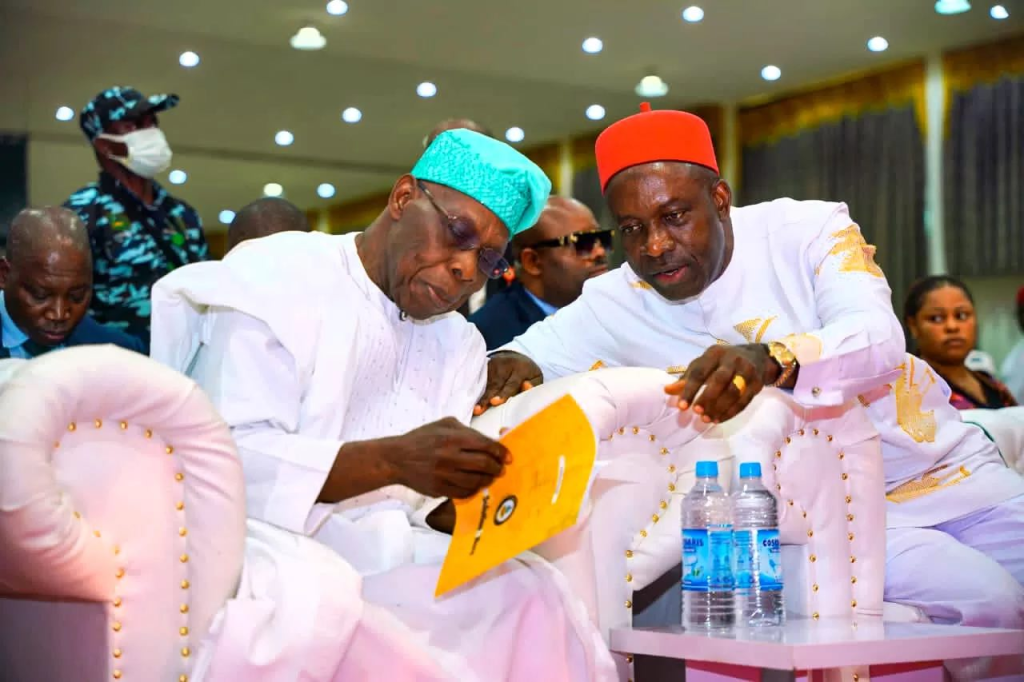
In recollection, Charles Soludo would later write: “President Obasanjo promised 100% support and actually delivered 1000%—which was decisive.” He added that other stakeholders were left in the dark ahead of the announcement, given its sensitivity.
The reaction was seismic. As Christian Aburime, Chief Press Secretary to Soludo, now the Anambra State Governor, would later recount, “Prof Chukwuma Charles Soludo’s appointment as the CBN Governor had earlier raised some dust among some of these Bank Chiefs. For the first time an economist, rather than a Banker was appointed to that position.”
The banking establishment was apoplectic. Only a few industry leaders publicly supported the reforms initially, including Dr. Pat Utomi, then Chairman of Platinum Bank and Atedo Peterside of IBTC Ltd, who would later acknowledge Soludo’s ingenuity after the consolidation’s success. The others worked behind the scenes to scuttle the reform.
Battling to Save the Reform
What followed was an unprecedented political battle. The opposition, consisting primarily of bank owners and those with vested interests in weak banks, mounted what Aburime described as “overwhelming pressure on the National Assembly.” The Senate, under intense lobbying, caved in on February 4, 2005 and passed the Central Bank of Nigeria (CBN) Amendment Bill and the Bank and Other Financial Institution (BOFI) Amendment Bill.
These bills sought to categorize banks into Mega, Medium, Small, Specialized and Community banks, with varying capital requirements that would have effectively derailed Soludo’s unified approach. The BOFI Act provided for capital bases of ₦25 billion for Mega banks, ₦10 billion for Medium banks and ₦5 billion for Small banks. The move was widely seen as an attempt to cut Soludo down to size. As investigations later revealed, many lawmakers held significant stakes in the troubled banks they were trying to protect. The categorization scheme was, in essence, a ploy to cut Soludo to size and ultimately reduce the autonomy of the CBN.
However, Soludo’s reforms had already gained momentum among the public and key stakeholders. Prominent bankers like Ben Akabueze of NAL Bank, Erastus Akingbola of Intercontinental Bank and Cecilia Ibru of Oceanic Bank publicly supported the ₦25 billion capitalization drive. The House of Representatives notably distanced itself from the Senate’s action and public opinion increasingly favoured the reforms.
Courage Under Fire
The personal cost to Charles Soludo was enormous. He received 21 written death threats against himself and his family members. The pressure was immense, as he later recalled: “Banks are not owned by the poor people in the street. Their owners are some of the most politically connected and powerful people in society. Some of my close friends also had significant stakes in the banks.”
Yet Soludo remained steadfast. To expedite the consolidation process, he established a ‘war room’ that brought together all necessary government officials, bankers, lawyers and accountants in one place. This innovation collapsed bureaucratic chains that typically took three to six months into a streamlined 48-hour process.
His unwavering commitment was crucial. As he would later emphasize, “This was the first time a fundamental policy reform was announced in Nigeria with clear timelines and milestones, and implemented to the letter without reversals and modifications, despite monumental opposition by strong vested interest groups.”
The Spectacular Results
By December 31, 2005, the transformation was complete. Charles Soludo had consolidated Nigeria’s 89 banks into 25 and revoked the licenses of 14 weak institutions. He executed the entire process without spending a single naira from the public treasury, a feat that set a world record for a financial consolidation of such scale.
The results were spectacular. The sector’s capital base more than doubled from $2.5 billion to $5.8 billion. Within just one year of the reforms, 14 Nigerian banks earned spots among the world’s top 1,000 financial institutions. By 2008, two Nigerian banks had broken into the global top 300. Foreign reserves grew from $10 billion to $62 billion in what was a clear signal of global confidence in Nigeria’s financial stability.
From the reforms, new banking technologies like ATM and e-banking emerged and boomed. The banking industry introduced 57,000 new jobs and new businesses emerged, with credit support from the bank. The effects were massive.
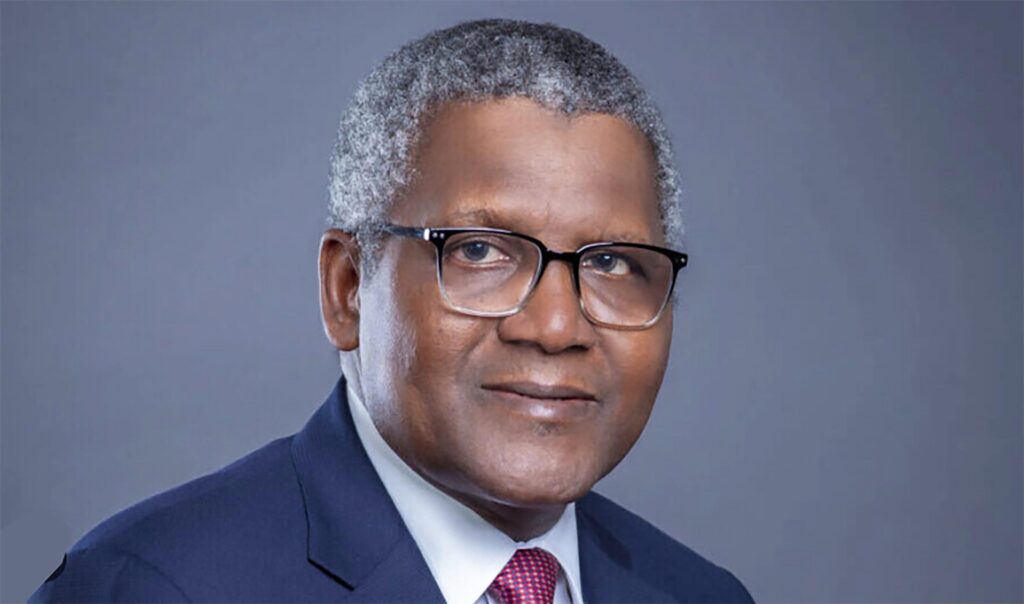
In Soludo’s words, “It was a new dawn for Nigerian private sector. I have heard Dangote twice say that he would not be near as big as he is today without the banking consolidation. Many other stakeholders still say it today. FDI and portfolio inflows flooded into Nigeria. The world celebrated, and one single transformative idea has changed the face of the private sector and economy forever. Banks became Nigeria’s first transnational corporations with about 37 branches outside of Nigeria.”
Again, “We also held the world record for achieving, for the first time, a consolidation of such magnitude without recourse to the public treasury – it cost the Nigerian Government nothing.” Before then, “Malaysia had the least cost of banking consolidation at 5% of Malaysian GDP. It did not cost Nigerian taxpayers one penny.”
Moving Beyond Capital and Building Infrastructure
Charles Soludo’s vision extended far beyond mere capitalization. His reforms introduced risk-based supervision, mandatory corporate governance codes and technological innovations like the Electronic Financial Analysis and Surveillance System (e-FASS) and the Nigeria Automated Clearing System (NACS). These innovations dramatically reduced clearing times and laid the groundwork for Nigeria’s later emergence as a fintech leader.
The governance reforms were equally transformative. The new Corporate Governance Code sought to eliminate family-controlled banks and one-man ownership structures and introduce international best practices and greater transparency.
The Soludo banking revolution demonstrated several crucial principles.
First, it required vision and courage.
Second, it showed that comprehensive reform requires simultaneous action across multiple fronts: capital, governance, technology and supervision must advance together.
Most importantly, it proved that decisive leadership could overcome entrenched interests when backed by public support and unwavering commitment to principles. As Soludo reflected, “I always expect the worst and plan accordingly,” but his planning was matched by an iron determination to see the reforms through to completion.
The transformed banking sector proved its resilience during the 2008 global financial crisis when it avoided the massive bailouts that characterized banks in other countries. This stability was a direct result of the stronger capital base and improved governance structures Soludo had implemented. Also, the groundwork Soludo laid enabled Nigeria to become a West African leader in mobile money and digital finance, decades before 2020’s cash crunch crises.
A Road Not Taken: The Naira Redenomination
Charles Soludo’s reform agenda extended beyond banking. One of his most ambitious but ultimately unsuccessful initiatives was the redenomination of the naira, which would have removed two zeros from the currency to make transactions more manageable and psychologically boost confidence in the currency.
In contrast to the successful banking reforms, stakeholders opposed Soludo’s naira redenomination plan and ultimately forced its abandonment. This raises intriguing questions about what might have been. Had Soludo received the same level of support for currency reform that he eventually garnered for banking consolidation, Nigeria might have achieved a more comprehensive financial transformation.