Hiding underneath the hype around the Dangote Refinery IPO are insights every serious investor needs to know about the IPO.
1. The “People’s IPO” and What It Actually Means
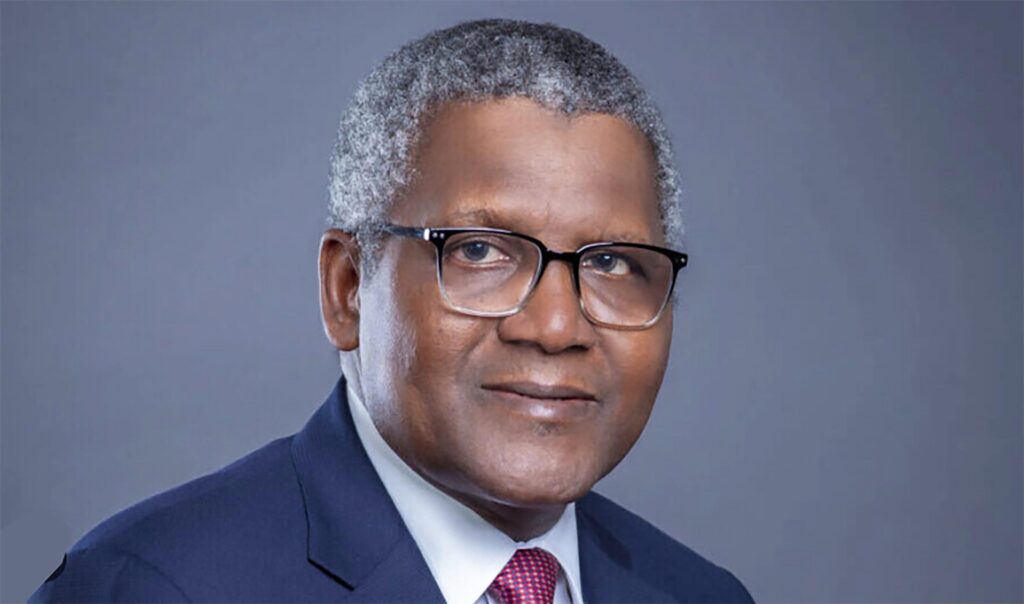
Aliko Dangote has been emphatic about the refinery’s public listing strategy. When the Nigerian National Petroleum Company attempted to increase its 7.25% stake in the facility, Dangote rejected the offer outright. His reasoning was that the refinery should not become another state-dominated asset. He wants Nigerians to own it.
The framing as “people’s IPO” framing makes it different from similar market listings, which tend to be institutional affairs retail participation as an afterthought. Also, the management have made the deliberate decision to rule out an immediate foreign listing and to keep the primary market in Nigeria for at least three years. No dual listing on Nairobi or Johannesburg for now. That creates genuine exclusivity for Nigerians, something that is a rarity in an era of global capital mobility.
Beyond Nigeria, the IPO also has a Pan-African character. Stock exchanges in South Africa, Kenya, Egypt, Ghana, and Rwanda have expressed interest. Kenyan participation of up to $500 million has been discussed, though no allocations are confirmed. The Johannesburg Stock Exchange separately indicated Dangote Group had shown strong intent to pursue a South African listing after Nigeria. This could bring new capital directly into Nigerian equities, broadening the investor base rather than simply redistributing existing holdings.
But beneath the populist language is a commercial logic. The company wants to prove production and financial performance over three years before considering overseas markets. When it eventually does list internationally, management believes it can command a higher valuation with a proven track record. Its private placement in July 2026 raised $2.5 billion and was 3.7 times oversubscribed. This suggests there’s appetite for this strategy and that institutional investors are already signalling confidence.
2. The $10 to $12 Moat
Operating at full capacity at seven hundred thousand barrels per day, makes Dangote the largest single-train refinery in the world. While this is impressive, certainly, but size alone doesn’t protect a business from commodity cycles. What does protect it is a structural cost advantage quantified on that investor call: $10 to $12 per barrel over European refiners, through the cycle.
European refiners themselves are at a disadvantage. They import crude from eighteen days away. They burn their own crude for fuel, sacrificing valuable product. Their average age is sixty to seventy years, with plants designed piecemeal over decades, never with heat integration in mind. The industry benchmark Solomon Associates puts first-quartile European operating costs at $5 to $7 per barrel, requiring a $10 to $12 margin just to stay sustainable.
Dangote flips every one of those constraints. Crude sits eighteen hours away by sea, not eighteen days. That’s a $2 to $3 freight advantage. Natural gas provides the refinery with 100% of its power, thus, eliminating the need to burn its own crude as fuel. This saves it another $2 to $2.50 per barrel, with emissions benefits besides. And then there’s the market advantage: import parity pricing on the domestic doorstep, another $2 to $4 per barrel, because the nearest competition must put product on a ship.
The management’s analogy about this advantage goes like this: in a downturn, you don’t have to be the fastest gazelle. You just need to make sure you’re not the slowest. European refiners are the slowest gazelles. They will close first.
The first half 2026 numbers bear this out. Revenue hit $13.9 billion, already exceeding full-year 2025. Gross margin of 23%, EBITDA margin of 19%, net income of $1.8 billion after a 15% tax provision. The refinery hit 100% of its 700,000 bpd capacity in Q2 and is now the single largest supplier of jet fuel into Europe. That’s not a headline you’d expect from a Nigerian refinery servicing its domestic market.
NB: The specific dollar breakdown, is management’s own accounting rather than a published third-party audit. So treat it as the company’s framing of its moat rather than a settled external figure. Read the full breakdown of the investor call.
3. The Crude for Naira Program
The relationship between Dangote Refinery and the Nigerian government has been a subject of endless speculation. Is the refinery getting subsidized crude? Is there a commercial arrangement that advantages Dangote over competitors?
The investor call clarifies that the Crude for Naira program is a currency settlement mechanism, not a subsidy. The refinery purchases crude at international benchmark prices. The only difference is the settlement currency. Management explicitly stated there is no commercial benefit to Dangote from the arrangement. The benefit flows to Nigeria’s macroeconomic outlook, reducing foreign exchange volatility. The program has been credited with helping stabilize the naira over the preceding eighteen months.
This matters because it reframes the refinery’s relationship with the state. Dangote has rejected crude allocations before. There is no obligation to accept a given grade, and the refinery processes a diverse basket of West African and global crudes. It approved ten new grades were technically in H1 2026 alone. The company is building feedstock flexibility, not dependence.
Yet the domestic crude supply question remains open. Much of Nigeria’s production remains committed under long-term export agreements. The government has introduced domestic supply obligations under the Petroleum Industry Act, but implementation has been inconsistent. The refinery has been forced to import crude from the US, Brazil, and Angola to maintain operations. This is a genuine commercial risk, one the prospectus will need to address with more than aspirational language.
4. Dividend To Be Paid In Dollar
One of the most unusual features of this listing is the dividend structure. The shares will purchased in naira but the dividends paid in US dollars. Aliko Dangote himself confirmed this arrangement, noting that 80% of company revenue will be dollar-denominated.
The catch is that this structure still requires approval from Nigeria’s Securities and Exchange Commission. Until that happens, it’s a marketing point, not a guarantee. Smart investors aren’t making decisions based on features that could change.
But the structure speaks to something deeper about the refinery’s economic logic. Export-oriented, dollar-earning, hedged against naira depreciation. This is an asset that looks more like an international energy company than a domestic manufacturer. The valuation comparisons cited in the analyst note are instructive: Turkey’s Tupras trades at about $12 billion, US-listed HF Sinclair at around $16 billion. The reported $40 billion private placement valuation is roughly 3.3 times Tupras and 2.5 times HF Sinclair.
Those comparisons aren’t dispositive. Profitability, debt, and growth plans differ materially. But the gap is wide enough that investors will need convincing evidence from the prospectus. The refinery carries about $3.65 billion in debt. That’s not alarming for a capital-intensive project of this size, but it’s a factor careful investors will weigh. If refining margins compress or crude supply faces disruption, debt servicing could reduce cash available for shareholder dividends.
5. The Expansion Logic Is More Interesting Than the IPO
The investor call spent considerable time on Vision 2030: a $12 billion growth plan that includes doubling capacity to 1.4 million bpd, tripling polypropylene output to 2.5 million tonnes per annum, building a new diesel hydrotreater for Euro 6 compliance, and constructing a Linear Alkyl Benzene plant that absorbs surplus jet fuel to produce biodegradable detergent feedstock.
The expansion is involves reusing existing licenses, cranes, site infrastructure, and the original jetty built to bring in imported equipment. The same technology partners, the same equipment vendors, the same field operators who learned the plant during commissioning will step across to commission the new units. Commonality of spares. Lower incremental capex. A construction workforce already housed and in place.
Management estimates the freight and logistics advantages will be even more pronounced at scale. The region remains structurally short of refined products. Sub-Saharan African demand sits at 4.9 million barrels per day. The refinery’s expanded capacity would still supply less than a third of that. This isn’t a bet against peak oil; it’s a bet that urbanization and energy poverty will continue driving demand, and that no Western capital is flowing into new refinery capacity to compete.
6. Crude Supply Is Still an Open Question
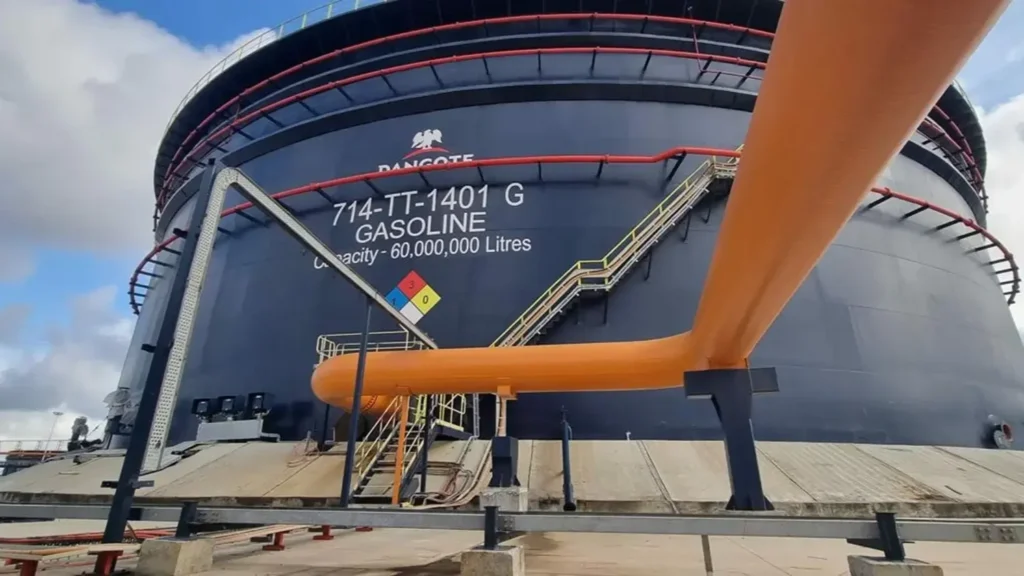
The refinery is running at full capacity. That’s an achievement worth celebrating. But sustaining that output depends on a feedstock supply chain that remains uncertain.
Nigeria’s crude production sits at roughly 1.6 to 1.7 million barrels per day. The refinery’s current capacity consumes 700,000 barrels daily. The planned expansion to 1.4 million barrels would require the country to significantly increase production just to meet domestic refining needs. The government’s Vision 2030 target of 3 million barrels daily is ambitious. It depends on new deepwater projects and improved onshore production, neither of which is guaranteed.
The underlying problem is structural. Much of Nigeria’s crude production remains committed under long-term export agreements with international oil companies. These contracts were signed when the country had no domestic refining capacity. They cannot be unwound overnight. The government has introduced domestic crude supply obligations under the Petroleum Industry Act, but implementation has been inconsistent. Management acknowledged this on the investor call, noting that allocations under the Crude for Naira program currently supply only 30 to 35% of the refinery’s needs.
This is why the refinery has been forced to import crude from the United States, Brazil, and Angola. That’s a functioning supply chain, not a distressed one. But it introduces costs and complexities that a fully domestic feedstock arrangement would avoid. The freight advantage from crude in the refinery’s backyard becomes less pronounced when the crude is coming from the Gulf of Mexico or West Africa’s other producing countries.
Management addressed this on the call with measured optimism. They pointed to improving Nigerian production trends and the eventual roll-off of pre-sold crude volumes from previous administrations. The management also expressed confidence that more government equity barrels would be allocated to domestic refining as those arrangements expire. They noted that West Africa’s Gulf of Guinea already produces 3.2 to 3.5 million barrels daily, with additional excitement around discoveries in Namibia and Angola.
All of this is plausible. But it remains a bet on government policy and upstream investment, not a certainty. Investors should examine the prospectus carefully for how the refinery models feedstock availability across different scenarios. The management team’s assurance that they’ve rejected crude allocations before and maintain feedstock flexibility is encouraging. It suggests the refinery isn’t dependent on any single supply source. But the expansion to 1.4 million barrels daily will require a step-change in crude availability that hasn’t yet materialized.
The single train risk that investors once worried about has been managed. The refinery is no longer a single point of failure. But feedstock security is a different risk entirely, one that operational discipline cannot fully mitigate.
7. The Risk to the Nigerian Exchange
The analysts quoted in the news reports are asking the right questions. If Dangote Refinery entered the Nigerian Exchange at close to a $40 billion valuation, it would account for roughly one-quarter of the resulting NGX market value. That’s a massive concentration risk. Few shares may be available for public trading if ownership remains concentrated. Investors may need to reduce other Nigerian holdings to participate, potentially moving capital away from existing listed companies.
The Dangote Refinery IPO is by all estimation a defining moment for Nigeria’s capital markets. But the defining question isn’t whether this is Africa’s largest ever public offering. It’s whether the listing combines a supportable valuation with broad public ownership and genuinely additional investment. Or whether it concentrates more market value around one company without expanding the pool of capital available to Nigerian equities.