Dora Akunyili’s war on counterfeit drugs was inspired by a personal tragedy. In 1988, she watched helplessly as her 21-year-old diabetic sister died from hyperglycemia. But it wasn’t diabetes that killed her; it was instead the fake insulin she had been given to treat it. The counterfeit medication not only lacked the life-saving hormone but was contaminated and caused abscesses that wouldn’t respond to antibiotics.
As Dora held her sister’s hand through those final, agonizing days, she could never have imagined that this event would eventually fuel one of the most remarkable public health campaigns in modern African history.
Joshua I. Mokwuah | September 28, 2026
1954 – Born in Markudi
Dora Akunyili was born in July 1954 in Makurdi, in the old Eastern Nigeria. She grew up in an upper-middle-class family. Her father, a renowned businessman and politician, recognized her exceptional intelligence early on and exempted her from household chores so she could focus entirely on her studies. Her mother and siblings resented the privileged treatment, so when Dora turned 10, the family sent her to live with her grandmother in a rural village. There, her uncle, a dedicated teacher, took charge of her education and subjected her to a rigorous academic routine.
The transition from urban comfort to village life was jarring. “Village life is hell on earth,” she would later tell The Guardian “It was a shock to me as a child who was used to eating good food, having running water, to find myself in the village with no toilet facilities, no running water.” But the hardship only strengthened her resolve. She excelled academically and earned scholarships first to high school and later to university, where she studied pharmacy at the University of Nigeria Nsukka.
After completing her PhD in ethnopharmacology from the University of London, Akunyili built a distinguished academic career and quickly rose through the ranks as a lecturer and researcher while also becoming involved in local government. By 1997, she was coordinating Petroleum Trust Fund (PTF) projects to improve infrastructure in southeastern Nigeria.
The Returned £12,000
It was during her time at PTF that Akunyili would demonstrate the integrity that would define her career. In 1999, she fell ill and was sent to London for treatment. The PTF provided £17,000, £12,000 for surgery and £5,000 for tests and medication. However, after thorough examinations, doctors determined that her Nigerian diagnosis was wrong. They instead recommended that she could be treated with simple medication instead of surgery.
What happened next was almost unheard of in Nigeria’s corruption-plagued system. Akunyili asked for the £12,000 back since she hadn’t needed the surgery and returned it to the PTF. Her consultant found this surprising since Nigerian public servants who had come for treatment often inflated their bills. Her supervisor, General Muhammadu Buhari, was astounded. He would write in his commendation letter to her, that he never knew that there were Nigerians with such integrity.
‘Clean up NAFDAC’
This act of honesty would change the trajectory of Nigerian public health. When Dr. Soleye, a childhood friend of President Olusegun Obasanjo, visited the PTF and heard about the woman who had returned £12,000, he was so impressed that he demanded her curriculum vitae. Two weeks later, on a Sunday, President Obasanjo himself called Akunyili, and asked why she had returned the money.
She explained that she had returned it because the money was not hers. Also, her Christian values prevented her from taking what did not belong to her. The President immediately decided she was the person he needed to ‘clean up NAFDAC.’
The appointment faced significant opposition. Akunyili wasn’t a card-carrying politician, didn’t belong to the ruling party, had no political godfather and faced gender discrimination. Additionally, as an Igbo woman, she faced ethnic prejudice, particularly since many drug counterfeiters were also Igbo. But President Obasanjo stood firm, and on April 12, 2001, he inaugurated Dora Nkem Akunyili as Director-General of the National Agency for Food and Drug Administration and Control (NAFDAC).
Akunyili reasoned that since the president appointed her because of her integrity, she had a duty to honor that trust and never compromise it.”That trust and confidence of the President in me was what motivated me to work selflessly and the same trust and confidence has actually permeated to all Nigerians.”
“Counterfeit Drugs are Murder”
The Nigeria Akunyili inherited was a public health nightmare. Before 2001, an estimated 41-80% of drugs circulating in the country were fake. Some suggest the figure could be as high as 80%. In 2001, 68% of drugs available were unregistered. Nigeria had become a dumping ground for counterfeit medications. NAFDAC functioned little better than a toll gate where importers simply paid bribes to get their products to market.
The human cost was staggering. Hospitals were using fake and contaminated drips. Surgeons were working with fake adrenaline to restart hearts. And anaesthetists were administering sub-strength muscle relaxants. The most commonly used medications in Nigeria, anti-malaria drugs, antibiotics and vitamins, were among the most counterfeited. The fake drug trade was not only killing people, it was also destroying legitimate businesses and driving multinational pharmaceutical companies out of the country.
Akunyili approached her mission with the fervour of someone on a crusade. “Counterfeit drugs are murder,” she famously declared. “It is the highest form of terrorism against public health because it kills a mass.”
Her Strategies
Dora Akunyili’s war on counterfeit drugs was driven by the understanding that education was key. Accordingly, Akunyili launched an unprecedented public enlightenment campaign. “We realized that solving a problem begins with acknowledging it,” she explained. “We had to tell people there was a problem so they would stop being deceived.”
NAFDAC held meetings with stakeholders across the spectrum fromreligious leaders, traditional rulers, medicine sellers, doctors to various professionals. They took their campaign to villages in what Akunyili called “grass roots mobilization.” The agency published educational materials showing the differences between fake and genuine drugs in newspapers every two weeks and launched school competitions with cash prizes and computers as rewards.
Structurally, Akunyili revolutionized NAFDAC’s operations. She established inspectorate offices in all 36 states plus Abuja, created six zonal offices and added specialized enforcement and ports inspection directorates. She implemented three crucial policies: banning drug imports through land borders, designating specific seaports and airports as exclusive entry points for pharmaceuticals and requiring shipping manifests to be released to NAFDAC inspectors.
To combat internal corruption, Akunyili fired corrupt staff. Afterwards, she rebuilt her team based on merit. She also emphasized female inspectors whom she believed were less susceptible to bribes. She established welfare packages, overseas training opportunities and reward systems for staff who reported defaulting companies.
Her Battles and Her Victories
The counterfeiters fought back viciously. In August 2001, armed men invaded Akunyili’s Abuja residence. They sought for her for two hours but fortunately finding her out of town. In August 2002, NAFDAC’s Lagos laboratory was vandalized and sensitive equipment destroyed. Between March 7-11, 2004, there was a coordinated burning of NAFDAC facilities across the country.
The most serious attack came in December 2003 when assassins shot at Akunyili’s car. “Bullets shattered the back windscreen of my car, pierced my head scarf and burned my scalp like a hot water burn,” she told The Guardian. There was no doubt that the attack was orchestrated by wealthy drug dealers from Onitsha market who had boasted months earlier that “the director-general would not live to see 2004.”
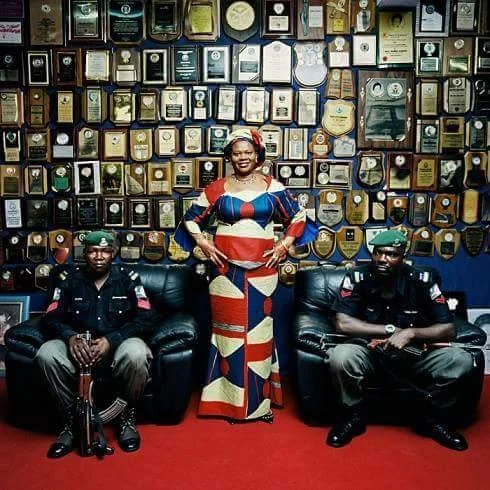
Despite the danger—Akunyili now travelled with eight armed guards and a bulletproof car—she pressed on. Her family pleaded with her to quit and most of her six children moved to the United States for safety. But she remained resolute: “If I leave this job, the drug counterfeiters would emerge victorious.”
The results spoke for themselves. Major operations shut down drug markets in Aba, Kano and Onitsha, (the biggest drug market in West Africa) for months at a time. In one operation code-named ‘Save the life of the Nation,’ NAFDAC mobilized 350 policemen, 150 soldiers and 150 trained staff to clamp down on over 2,500 shops in Onitsha market.
Between 2001 and 2006, NAFDAC carried out 121 destruction exercises of counterfeit products valued at over ₦22.8 billion. The agency secured 45 convictions while 60 cases remained pending in courts. Most importantly, counterfeit drugs dropped from over 41% in 2001 to 16.7% in 2006. Unregistered drugs also fell from 68% to 19%.
All these milestones were reached within her 5-year tenure.
International Recognition and Legacy
Dora Akunyili’s war on counterfeit drugs gained international recognition. She initiated the formation of the West African Drug Regulatory Authorities Network (WADRAN). The International Medicine Products Anti-Counterfeiting Taskforce (IMPACT) under WHO auspices, with her efforts. Her efforts earned numerous awards, including recognition as an ‘Icon of Hope for Nigeria’ by President Obasanjo and the Integrity Award from Transparency International.
The transformation was remarkable: local pharmaceutical production increased from 70 to 150 companies between 2001 and 2006. Multinational pharmaceutical companies that had left Nigeria began returning. Other West African countries lifted bans on ‘Made-in-Nigeria’ drugs.
The story of Dora Akunyili’s war on counterfeit drugs is ultimately about the transformative power of moral leadership in public service. In a system riddled with corruption and filled with unscrupulous characters, she demonstrated that one person with integrity, backed by unwavering determination and clear vision, could revolutionize an entire sector that affected millions of lives.
Akunyili proved that public service could be both a moral calling and a practical force for transformation. In a continent often plagued by ineffective governance, she demonstrated what was possible when leaders placed public welfare above personal gain. As one WHO colleague observed, “If the African continent were full of Doras, it would be easier to get rid of counterfeits.” Her story remains a beacon of hope, and evidence that even in the most challenging circumstances, principled leadership can indeed save lives and transform nations.
Akunyili died from uterine cancer in 2014 but her legacy still guides the operations and vision of NAFDAC. The agency owes its good standing among Nigerians thanks to her fight. Though Nigeria’s problems with fake drugs persist, Nigerians no longer feel helpless.