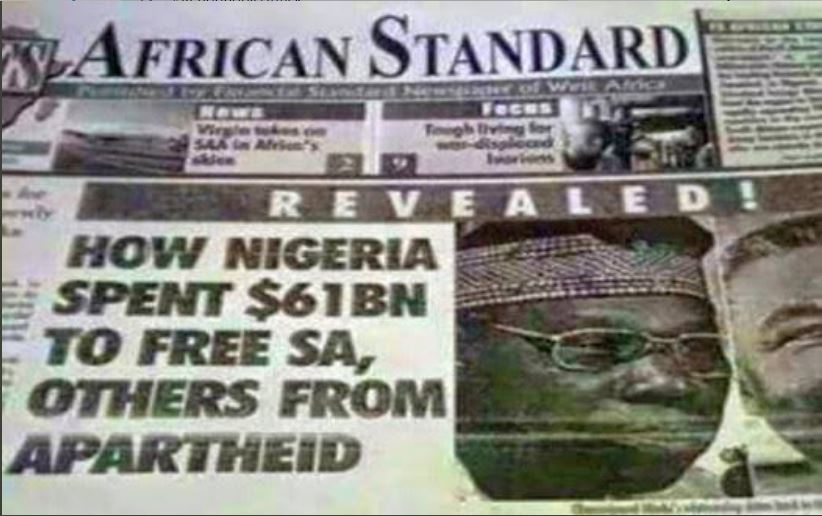
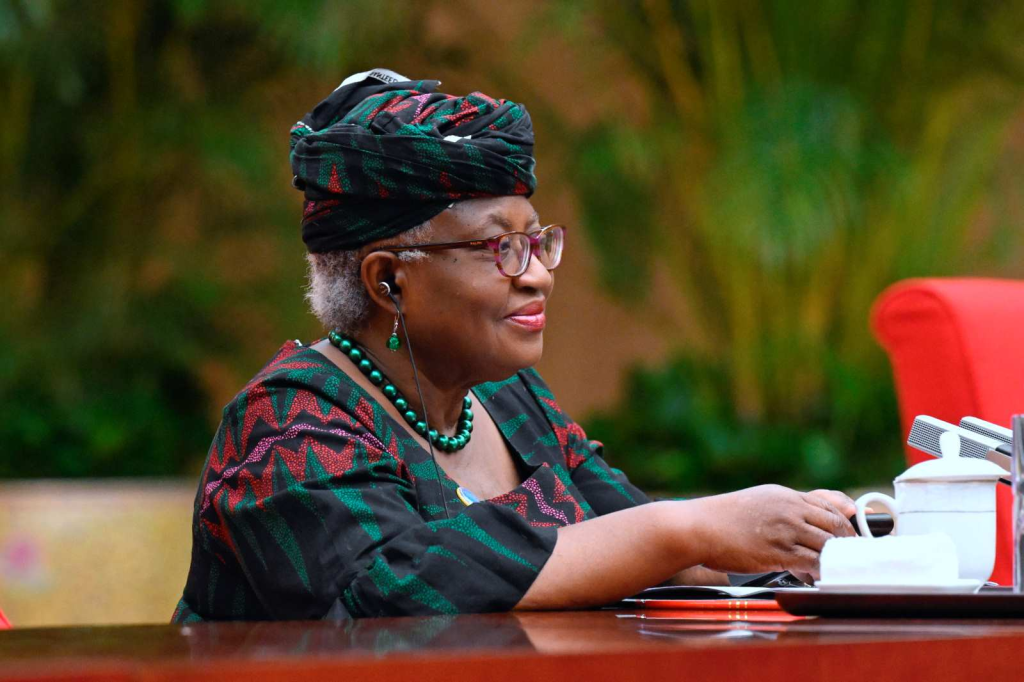
In 2005, Nigeria achieved what many considered impossible: the largest single debt relief package in African history. All this was due to the personal efforts of Dr. Ngozi Okonjo-Iweala, a Harvard-educated economist who had risen through the ranks of the World Bank to become Nigeria’s Finance Minister.
Joshua I. Mokwuah | October 26, 2026
Drowning In Debt
When Ngozi Okonjo-Iweala took office as Finance Minister in June 2003, Nigeria was drowning in debt accumulated during the economic mismanagement of the 1970s and 1980s. The country owed approximately $31 billion to the Paris Club of bilateral creditors.
This staggering burden translated at effectively at 40 cents on the dollar in real terms. The debt overhang was strangling Nigeria’s development prospects, with billions of dollars that could have gone toward education, healthcare and infrastructure instead flowing out to service foreign creditors. Nigeria’s reputation compounded this challenge. Despite being Africa’s most populous country and largest oil producer, years of corruption and economic mismanagement had left international creditors deeply skeptical about providing any relief without ironclad guarantees of reform.
In 2017, Obasanjo would recall how his interest in reducing Nigeria’s tax burden had shaped his second tenure as president and led to the appointment of Okonjo-Iweala. “I visited most Western capitals to present anew Nigeria’s case,” he recounted. “One such visit was to Washington DC where I met President Clinton and the president of the World Bank, Jim Wolfensohn. “I raised the issue of debt relief with both of them and asked Jim for both support and advice. He advised that Nigeria should urgently embark on a comprehensive reform to impress its creditors. If Nigeria was doing well in its economic reform and management, it would get the World Bank’s support,” Obasanjo recalled.
“After my first term, I realized that my talks at the highest political levels needed follow-up at the levels below. So, I head-hunted Ngozi Okonjo-Iweala from the World Bank, appointing her as Nigeria’s Minister of Finance.”
Her Strategy
Okonjo-Iweala’s approach was, by reasonable standards, audacious. Rather than immediately asking for debt relief like her predecessors, she embarked on a completely different strategy. When she first met the G8 finance ministers in 2003, she deliberately didn’t ask for any debt relief at all. Instead, she spelled out her economic policies, and told the assembled creditors that if and when she could show that those policies were working, then she would ask for debt relief. She would ask for relief on the back of “doing the right things.”
This was rather counterintuitive to how Obasanjo had tried to frame the relief: “I would… explain that Nigeria’s population of almost 150 million at the time and its stage of development should justify such relief.” But Nigeria’s position as one of the world’s major oil-producing countries, often short-circuited this appeal.
Okonjo-Iweala’ deep understanding of creditor psychology shaped this counterintuitive approach. The UK, France and Germany—Nigeria’s biggest creditors at the time—had grown weary of throwing good money after bad in a country with a history of economic mismanagement. Okonjo-Iweala knew that political arguments alone wouldn’t suffice; she needed to demonstrate concrete economic reforms.
The NEEDS Program and Economic Reforms
The centrepiece of her strategy was the National Economic Empowerment and Development Strategy (NEEDS), which she described as “a very well defined structural reform programme” designed to provide macroeconomic stability through non-oil GDP growth, disinflation, management of foreign reserves, fiscal discipline, and budget transparency at both federal and state levels.
One of her most significant innovations was publishing the monthly allocations to each state. “This has been a revolution,” she noted. “Now people ask what is happening to their money at the local government level and demand accountability.” This transparency measure alone transformed Nigeria’s fiscal governance.
But perhaps her most crucial achievement was delinking the national budget from volatile oil prices. “We know that oil prices are mean-reverting,” she explained. “We have to plan carefully for the day when oil prices come down.” By basing the 2004 budget on oil at $25 per barrel and the 2005 budget on $30 per barrel, with excess revenues saved rather than automatically spent, Nigeria began building foreign reserves and demonstrating fiscal discipline.
Navigating the IMF Problem
One of the most delicate aspects of the debt relief negotiations involved the International Monetary Fund. The Paris Club typically required an IMF agreement before granting debt relief, but Okonjo-Iweala was adamant about avoiding a traditional IMF program. “If you want to stop reform dead in its tracks, the best thing you can do is to invite in the IMF,” she declared. “If Nigerians thought that this was being imposed from outside, it would never succeed.”
Her solution was characteristically innovative. She convinced President Obasanjo to invite the IMF to review Nigeria’s books quarterly through a “policy support instrument”. The instrument was essentially a way for Nigeria to certify its reforms to the international community without having a formal IMF program. This approach was unprecedented and has since become a model for other countries.
Finding A Champion in the UK
With her reform credentials established, Okonjo-Iweala turned to building international support for debt relief. She was told, as she recalled, “We were told you need a champion,” and she identified the UK as the natural choice. Britain was not only Nigeria’s largest creditor but was also about to chair the G8, where debt relief was a priority.
The lobbying effort was intensive and strategic. Okonjo-Iweala worked closely with senior UK Treasury official Jon Cunliffe, Chancellor Gordon Brown, International Development Minister Hilary Benn and Prime Minister Tony Blair. Simultaneously, she leveraged her World Bank connections to have Nigeria reclassified from a “blend country” (receiving both commercial and concessional loans) to an “IDA-only country,” making it much easier for the Paris Club to grant debt relief.
The June 2005 Agreement
The breakthrough came in June 2005. After months of negotiations, the Paris Club announced the largest single debt relief package in African history. Nigeria would receive a 67% debt reduction worth $18 billion, while paying off $12.4 billion to settle all its Paris Club debts, effectively buying back its entire debt stock at a massive discount.
The deal was structured in phases. First, Nigeria would pay $6 billion in arrears and receive a 33% debt cancellation. After an IMF review, creditors would grant an additional 34% cancellation, and Nigeria would buy back the remaining debt at market rates. “We are thrilled by this news,” she announced in response to the news. “It will mean more money for roads, rural electricity, health, education and HIV/Aids.”
The agreement was unprecedented in several ways. Nigeria became the first country to buy back Paris Club debt below par, and the deal recognized Nigeria’s ‘home-grown reform programme’ as legitimate grounds for debt relief, a major departure from traditional IMF-imposed structural adjustment programs.
Monitoring the Savings
Recognizing the importance of demonstrating responsible use of the savings, Okonjo-Iweala established robust monitoring mechanisms. President Obasanjo chaired a millennium development committee that included representatives from Action Aid and Oxfam. Ngozi Okonjo-Iweala appointed Mrs. Amina Ibrahim to lead a committee that tracked the flow of saved funds from their release to final expenditure.
The immediate impact was significant. The deal freed up an additional $1 billion each year for development spending that enabled the government to plan the recruitment of 120,000 new teachers and the enrollment of 3.5 million more children in school.
Remarkably, all this had happened within a period of two years.
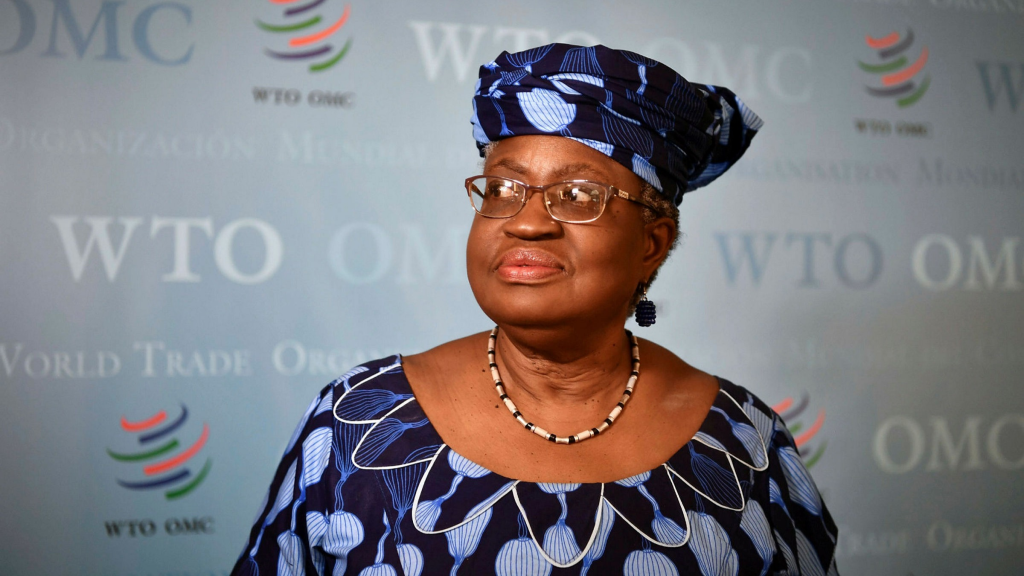
“Nigeria should never fall back into the debt trap. – The Prophecy that Never Came to Pass
Nearly two decades after the triumphant announcement of the largest single debt relief package in African history, the glow of Ngozi Okonjo-Iweala’s achievement has dimmed beneath the shadow of a resurgent debt crisis. What was once heralded as a defining moment of fiscal rebirth has, in hindsight, become a cautionary tale about institutional fragility and the transient nature of reform in a deeply politicized state apparatus.
By 2014, when Okonjo-Iweala returned as Finance Minister during the Goodluck Jonathan administration, she herself offered a quiet warning. She stressed that “Nigeria should never fall back into the debt trap,” and expressed the need for the country to protect the gains of 2005. But even then, the signs of regression were already visible. Nigeria’s domestic debt had climbed to ₦8.9 trillion and the subsequent administration had normalized external borrowing as part of public finance. Although the debt-to-GDP ratio remained officially within sustainable thresholds, the underlying patterns of fiscal indiscipline, excessive recurrent expenditure, and dependence on oil revenues were re-emerging like old ghosts.
20 Years Later, It All Feels Like A Dream
Despite the groundbreaking innovations Okonjo-Iweala introduced, chief among them the public disclosure of monthly federal allocations and the implementation of the NEEDS framework, successive administrations steadily retreated from the ethos of transparency and fiscal discipline she championed. Sovereign wealth mechanisms, such as the Nigeria Sovereign Investment Authority (NSIA), received inadequate funding or suffered political marginalization. Even more striking, the Excess Crude Account (ECA) that was once a fiscal buffer and emblem of macroeconomic prudence under Okonjo-Iweala’s stewardship, dwindled from over US $20 billion in 2008 to just US $473,754 by December 2022.
By the first quarter of 2024, Nigeria’s total public debt had surged to ₦121.67 trillion (approximately US $91.5 billion). The debt-to-GDP ratio stood at 53.8% as of September 2024, a marked increase from the sustainable levels achieved post-2005. By December 2010, it was just 9.6 %. Although still within nominal thresholds deemed manageable by international benchmarks, the quality of the debt, its concentration in short-term domestic instruments, and its disproportionate consumption of federal revenue have reignited fears of debt unsustainability.
In practical terms, Nigeria is now spending the vast majority of its revenue, which at times was over 90%, on debt servicing, with little left for infrastructure, education, or healthcare. The hard-won gains of 2005, it seems, were not structurally insulated from regression with the very architecture that once earned Nigeria praise from the IMF and G8 partners now dismantled.