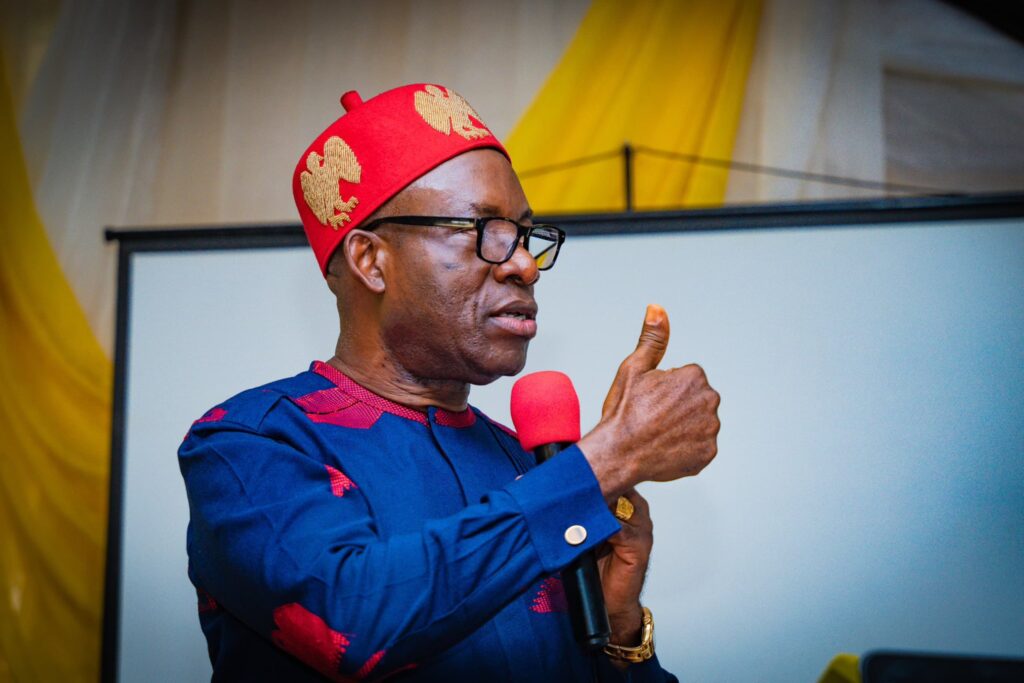
Whenever tensions flare between Nigeria and South Africa especially following xenophobic attacks, Nigerians respond across social media: “Nigeria helped end apartheid!” But how exactly did Nigeria help end apartheid in South Africa?
By Joshua I. Mokwuah | August 31, 2026
1961: Balewa’s Letter to the ANC
Nigeria’s participation in South Africa’s liberation struggle began almost immediately after Nigeria gained independence in 1960. Just months later, in March 1960, the world watched in horror as South African police shot dead 69 anti-apartheid protesters, including women and children, in Sharpeville. This massacre for the isolation apartheid regime on a path of international isolation and increasingly brutal repression. Nigeria, a newly independent nation, still finding its feet on the global stage, took a principled stand against this tragic event that would define its foreign policy for decades.
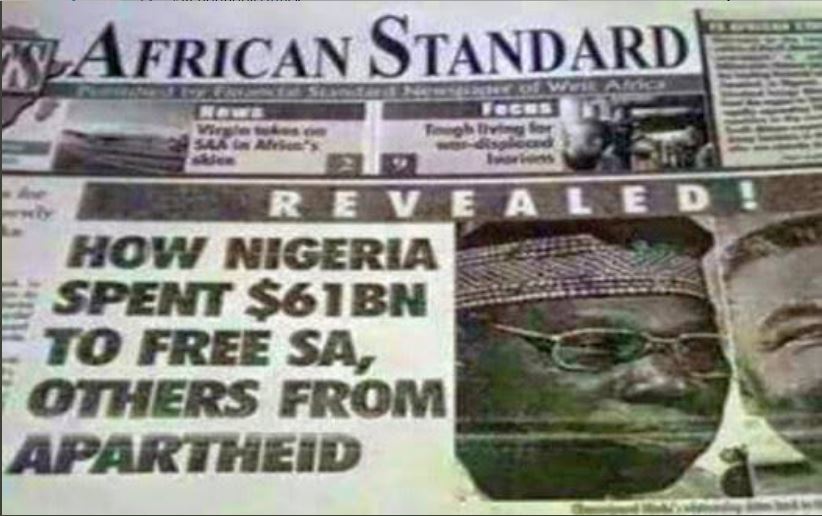
On April 4, 1961, Nigeria’s first Prime Minister, Sir Abubakar Tafawa Balewa, sent a powerful letter of solidarity to the African National Congress (ANC). The note originated in the Cabinet Office in Lagos and was addressed to Mr. M. Herbstein. The letter was signed by A. Ahmed Kari, the Acting Principal Private Secretary to the Prime Minister. This note became the first official communication from any Nigerian leader directly supporting the ANC’s liberation efforts. Immediately following this gesture, Balewa spearheaded efforts within the Commonwealth to expel South Africa by leveraging Nigeria’s diplomatic channels to isolate the apartheid regime.
Remarkably, Balewa’s administration wasn’t only committed in word but moreso in action. Nigeria became the first African government to deliver direct financial aid to the ANC in the early 1960s. This move predated more public support structures like the later Mandela Tax. Nigeria also became one of the founding voices behind the UN Special Committee Against Apartheid in 1963. For years, it chaired this crucial committee that oversaw the implementation of international sanctions against the racist regime.
1976: The Southern African Relief Fund
Perhaps no other gesture better captures Nigeria’s commitment to South Africa’s liberation than the establishment of the Southern Africa Relief Fund (SARF) in 1976.
The fund was set up to “bring relief to the victims of the apartheid regime in South Africa.” And to “provide educational opportunities to them and promote general welfare.” A broad section of the Nigerian society contributed to this fund. The Nigerian government made compulsory deductions from the earnings of public servants towards establishing this fund. Government employees paid directly from their monthly salaries in what was widely known as the ‘Mandela Tax.’
Then-president General Olusegun Obasanjo contributed $3.7 million to the fund along a personal donation of $3,000. Every member of his cabinet made donations of $1,500 each to the cause of the liberation of black people in South Africa. Beyond government officials, were civil servants who gave 2% of their income to the fund. Students also contributed what they could: “students joyfully skipped their lunch at school just to be able to contribute to the fund.”
Nigerian families literally took food from their own tables to support the freedom struggle of people they had never met but whom they considered brothers and sisters. What mattered most was not the amount, but the conviction that injustice anywhere on African soil was intolerable, even if it meant hardship at home.
1976: The National Committee Against Apartheid (NACAP)
Beside financial contributions, Nigeria opened its doors, becoming a sanctuary for South African refugees who had fled apartheid persecution. For instance, after the 1976 Soweto uprising, when young South Africans were being brutalized for demanding education in their own languages, Nigeria opened its doors and its classrooms.
Through the National Committee Against Apartheid (NACAP), hundreds of South Africans resident in Nigeria went to school free of charge. The Nigerian High Commission in Botswana issued hundreds of Nigerian passports to South Africans who had fled their country and gave them the dignity of citizenship when their own nation had stripped them of basic human rights.
Many of these students would later return to post-apartheid South Africa to occupy key positions in government, the private sector and academia and serve a living testament to Nigeria’s investment in South Africa’s future.
1977: Festac
In 1977, Lagos hosted the Second World African Festival of Arts and Culture (FESTAC), which brought together artists from across the continent and united them in the international struggle against apartheid. Nigeria positioned itself as ‘the leader of the black world’ and was seen by some as “the new global hub of the anti-apartheid movement.”
The country also played a crucial role in securing Namibia’s independence by 1990 by supporting the South West African People’s Organisation (SWAPO) financially in its efforts to end South African occupation.
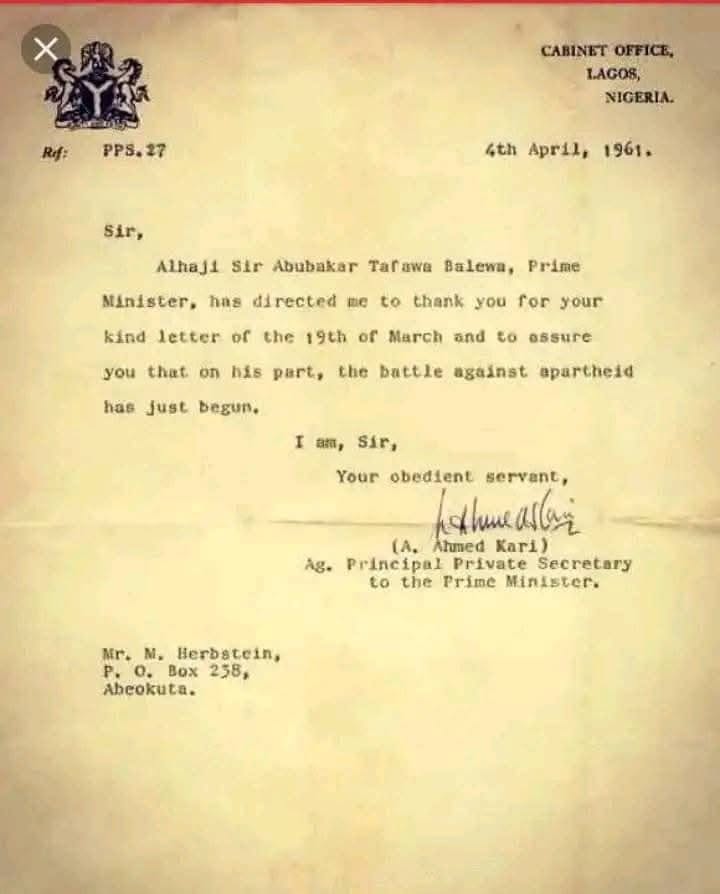
By the time apartheid ended, Nigeria had spent an estimated $17 billion in support of liberation struggles in Southern Africa. Some sources suggest the figure was even higher – with Nigeria alone spending over $61 billion from 1960 to 1995 to support the end of apartheid, more than any other country in the world.
This massive expenditure came at a time when Nigeria itself was struggling with development challenges, military coups, and economic difficulties. Yet the country’s leaders and citizens consistently chose to prioritize African liberation over domestic comfort.
Nelson Mandela himself acknowledged this support, receiving a reported $10 million campaign contribution for the ANC on a visit to Nigeria in 1990. Upon his release and following South Africa’s transition to democracy, Nigeria sponsored the UN Security Council resolution that welcomed South Africa back into the international community in 1994.
1995-1996: The Mandela-Abacha Crisis
The relationship that helped bring end apartheid wasn’t without its rocky moments. The lowest ebb came post-apartheid, in 1995-1996 when Nelson Mandela confronted Nigeria’s military dictator, General Sani Abacha, over the execution of environmental activist Ken Saro-Wiwa and eight other Ogoni campaigners in November 1995. Mandela had worked to prevent the executions, believing he had assurances they wouldn’t be carried out. The execution left him devastated.
The new South African president led international calls for oil sanctions against Nigeria and its suspension from the Commonwealth. Mandel also called for Abuja to commute the death sentences of, and release, prominent political prisoners including General Olusegun Obasanjo and General Shehu Musa Yar’Adua.
Nigeria’s pugnacious information minister at the time, Walter Ofonagoro, dismissed Mandela as the “black head of a white country.” Yet even in this crisis, many Nigerians understood and appreciated Mandela’s principled stand, even as they disagreed with his methods.
1998: Obasanjo and Mbeki
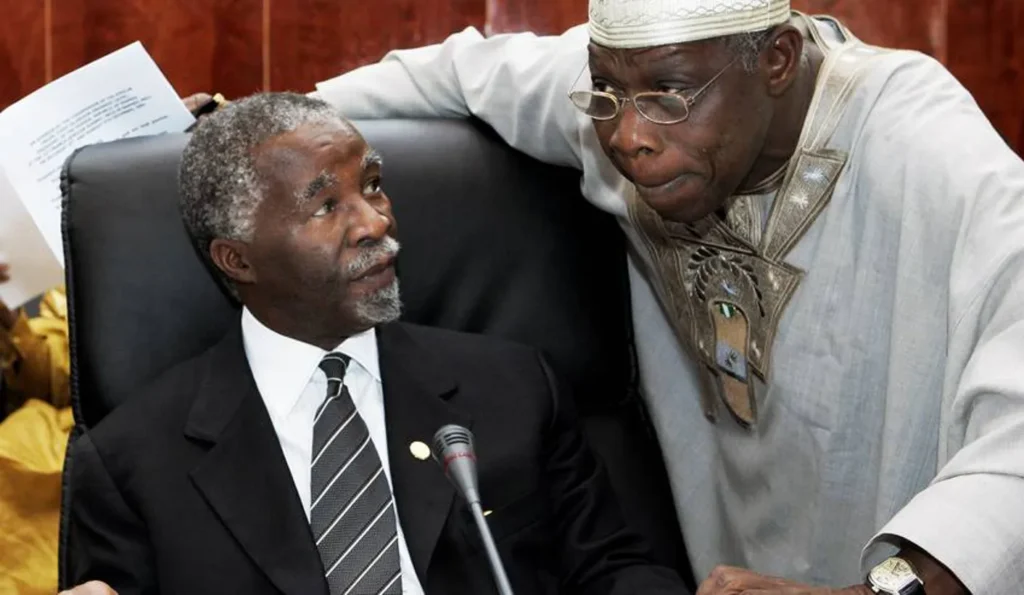
Following General Abacha’s death in 1998, relations improved dramatically under the leadership of Nigeria’s Olusegun Obasanjo and South Africa’s Thabo Mbeki. Both men came to power in 1999 and shared a vision of African renaissance. Thabo Mbeki, had lived in Nigeria as the ANC head of mission between 1977 and 1978 and had at the time, befriended Obasanjo, who was then the military
head of state.
Obasanjo spoke of the two countries having “the burden of turning around the fortunes of our continent,” and together they worked to transform the Organisation of African Unity into the African Union, developed the New Partnership for Africa’s Development (NEPAD), and championed debt relief for the continent.
Their partnership was so close that Obasanjo later described their coordination: “There was a perfect understanding between Nigeria and South Africa when I was president of Nigeria and president Mbeki was in charge [in South Africa]. South Africa will not show interest in any position Nigeria wants and Nigeria will not show interest in any position South Africa wants.”
The Debt of History
Today, whenever tensions arise between the two African giants — which is often the case thanks to South Africa’s history of xenophobia — the invocation of apartheid-era solidarity might seem like emotional blackmail. But it’s actually a reminder of what’s possible when African nations choose cooperation over competition, principle over profit. Nigeria supported the anti-apartheid struggle not for economic gain or political advantage, but because its leaders and people believed, with unwavering conviction, that fighting for the freedom and dignity of black people everywhere was a moral imperative, no matter the cost.
As successive South African presidents have acknowledged their debt to Nigeria and other frontline states, they recognize that this history creates both gratitude and responsibility. It’s a reminder that the challenges facing Africa today, from poverty to conflicts to marginalization on the global stage, require the same spirit of solidarity that brought down apartheid.
So, the next time a Nigerian brags about how Nigeria helped end apartheid in South Africa, remember it’s not just about the past. It’s about the future that solidarity can still build, if both nations choose to honour the sacrifice of those who came before them.
Read: The Ikoyi Incident that Helped Avert the Rise of Apartheid in Nigeria
Colonial authorities in Nigeria enforced racial segregation through policies that excluded Nigerians from elite spaces. In Lagos, they designated Ikoyi as a “European reservation,” a district exclusively reserved for white colonial officials and businessmen. Nigerians could not live there. To reinforce this separation, the British constructed the MacGregor Canal, physically dividing Ikoyi from the rest of Lagos. Across the colony, they imposed similar restrictions, segregating public facilities, hotels and social clubs and denying native Nigerians access to institutions designed for white residents.
However, a seemingly minor incident happened at Bristol Hotel, Ikoyi, in 1947. It would spark a protest movement that nipped this evil in the bud and altered the course of Nigerian history.