Africa’s largest company is about to go public. However, most of what’s been written about it so far is secondhand and speculations. SimplVest got the primary numbers, directly from a H1 2026 investor call with the CEO, COO, CFO and strategy team of Dangote Petroleum Refinery & Petrochemicals (DPRP). Here’s a breakdown for those intending to invest when the Dangote Refinery IPO goes live.
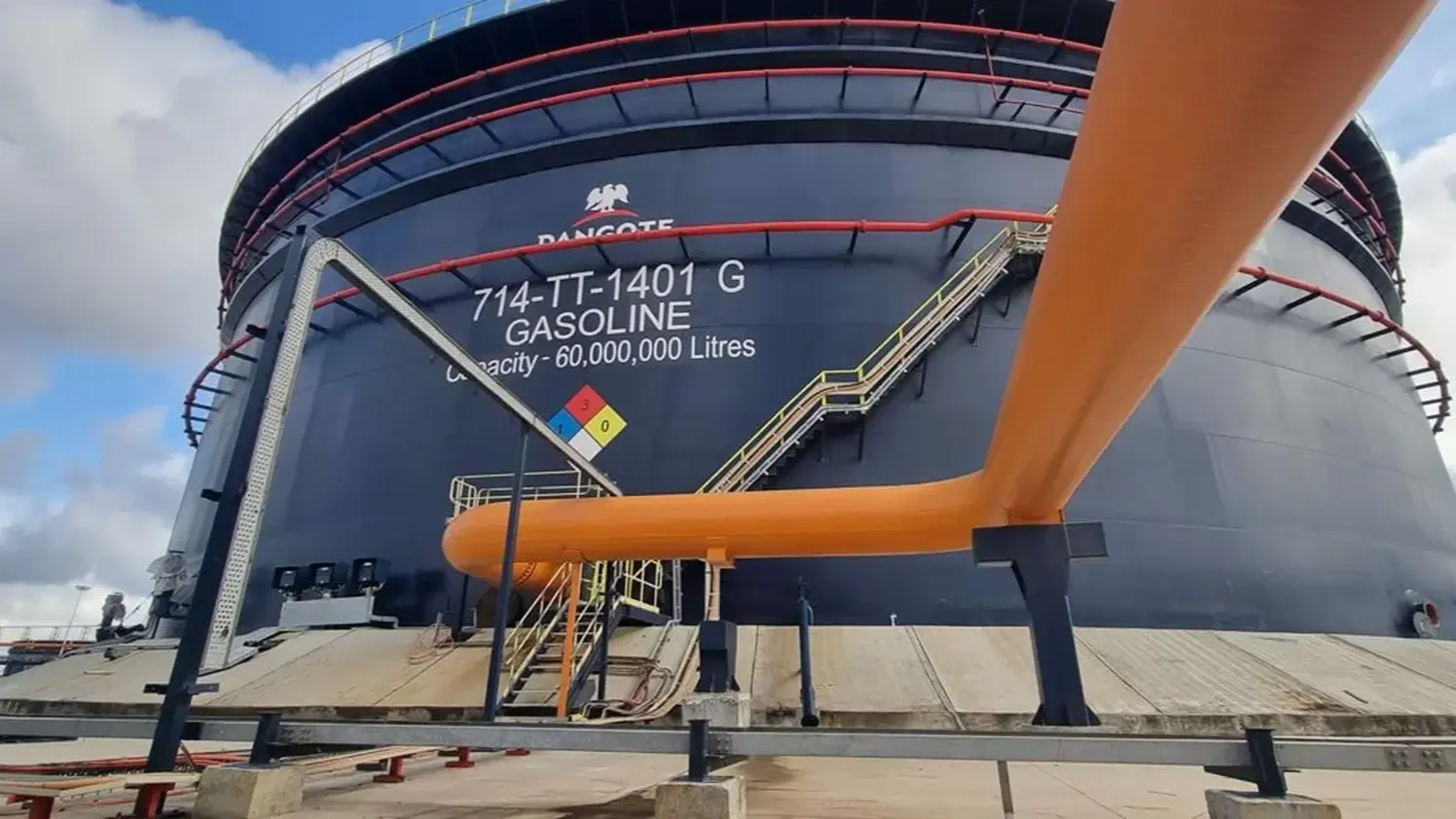
1. It’s not really a refinery per se but a trading operation with a refinery attached
DPRP doesn’t lock itself into one crude source. Instead, it uses a model that is updated daily. The model lets its trading team price out new crude grades for margin. Morever, the plant itself runs entirely on natural gas rather than burning its own crude for fuel as is the norm at most peer refineries.
For example, ten new crude grades were technically approved in the first half of 2026. In the words of the CEO: the refinery is “a trading-led merchant refinery.” This matters for the upcoming IPO because it means that DPRP’s margins aren’t hostage to any single supplier or grade. It can chase whichever crude is cheapest on a given day.
2. About a third of its crude comes from a government program
About 30–35% of DPRP’s crude volume flows through a Petroleum Industry Act program. The program lets the refinery buy crude at international benchmark prices but settle in naira. Management is emphatic that this isn’t preferential pricing as it has turned down allocations before. By cutting FX volatility, the arrangement has played a role in stabilizing the naira over the past 18 months.
For investors, the interesting wrinkle is what it signals about political risk. The arrangement benefits Nigeria’s macro picture more than it benefits Dangote specifically. This is presumably why the management isn’t worried about it disappearing.
3. It’s already the largest single supplier of jet fuel into Europe although it barely touches Nigeria’s jet demand.
DPRP ran at 100% of its 700,000 bpd capacity through all of Q2 2026. Its fuels meet Euro 5 spec, which dropped Nigerian diesel sulphur content from roughly 3,000 ppm to 50 ppm overnight. But the standout stat is jet fuel: DPRP meets under 10% of Nigerian jet demand, leaving it structurally long on the product. According to the management, that surplus has made it, the single largest supplier of jet fuel into Europe. It confirmed some of its counterparties to include BP, Mercuria, Trafigura, Sinopec and Glencore, which is a meaningful signal of trading credibility for a five-year-old operation.
4. Management claims a $10–12 per barrel structural cost edge over Europe, though that figure is theirs, not an independently audited one.
This is the number doing the most work in DPRP’s investment case, so it’s worth being precise about where it comes from. Management breaks it into four pieces:
- European refiners need roughly $10–12/bbl margin just to stay viable against a $5–7/bbl operating cost baseline (citing the Solomon Associates industry benchmark);
- DPRP’s crude sits 18 hours away by sea versus 18 days for European refiners bringing in Gulf Coast crude, worth $2–3/bbl in freight;
- Natural gas power over fuel oil is worth another $2–2.50/bbl; and
- Import parity pricing on its domestic doorstep adds $2–4/bbl.
Add it up and you get the locked-in $10–12/bbl advantage that management effusively cited in the call. Included in the call was a memorable line about not needing to be the fastest gazelle, just not the slowest one when the lion’s chasing. It’s a compelling story and the underlying pieces (freight distance, energy cost, market proximity) are all verifiable in principle. However, the specific dollar breakdown, is management’s own accounting rather than a published third-party audit. So treat it as the company’s framing of its moat rather than a settled external figure.
5. The growth plan is $12bn, and most of it is about capturing more value per barrel, not just pumping more of them.
The company’s Vision 2030 covers five projects in two phases.
Phase one is distribution infrastructure: a jetty upgrade for smaller coastal vessels and a 1.6 million-barrel tank farm in Walvis Bay, Namibia, to reach Botswana, Zambia, Zimbabwe and the DRC.
Phase two doubles refining capacity to 1.4 million bpd through what management calls “ruthless replication”. In other words, reusing existing licenses, cranes and site infrastructure to cut incremental capex. This replication will also mean nearly tripling polypropylene capacity as well as adding a diesel hydrotreater for Euro 6 compliance and a Linear Alkyl Benzene plant that soaks up surplus jet fuel to make detergent feedstock.
The framing from strategy head Daniel Trapo is that alongside bringing more throughput, it will also capture higher value capture from an integrated platform.
6. Management insists the single-train risk is resolved, and the board includes a former Shell Nigeria chair.
DPRP’s original vulnerability was that it ran on essentially one production line. Therefore, if a key unit went down, the whole refinery could stall. Management pointed to a recent maintenance period where intermediate feedstocks kept downstream units running while primary units were serviced as proof that’s no longer the case. Governance-wise, the board includes independent non-executive directors, among them the former country chair of Shell Nigeria. And the stated top risk isn’t competition or feedstock access, it’s global demand destruction if current elevated margins prove unsustainable.
7. The IPO could go live in October
At the time of the call, every IPO-related question on the call was redirected to financial advisors. Management said dividends will stay below 10% of distributable income during the growth phase, rising once the capital program normalizes. They also said that the $12bn in growth capex is being funded through a broader mix that isn’t solely dependent on IPO proceeds.
On August 18, however, DPRP’s advisers — Marob Strategies and Lilium Capital — confirmed a $1 billion underwriting programme backing the listing. First is a $600 million private placement that’s already funded, and another $400 million commitment that kicks in once the IPO actually launches.
According to Reuters who cited a source familiar with the matter, DPRP has filed for a $5 billion offering with Nigeria’s SEC, though the final size isn’t locked in. The plan is to list in Lagos, with the offer expected to wrap up in October, pending regulatory sign-off. When it goes live, the IPO would be the largest in African market history.