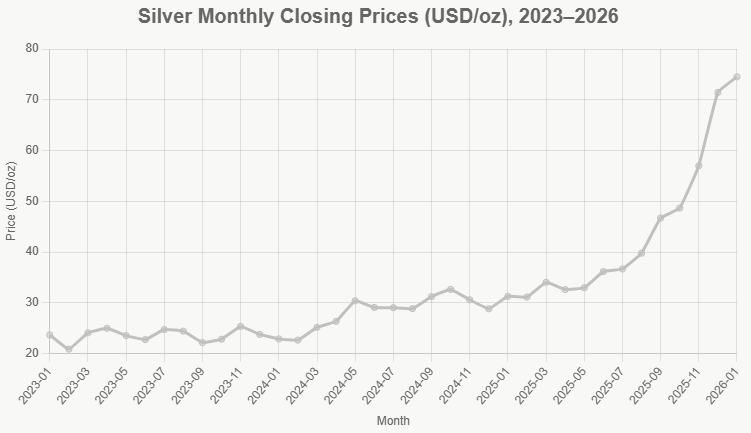
Silver grew at an extraordinary 148% in 2025; its strongest annual performance since 1979. It even entered the New Year climbing above $74 per ounce. For investors seeking alternatives to traditional stocks and bonds, silver’s combination of industrial utility and safe-haven status are a unique opportunity worth exploring.
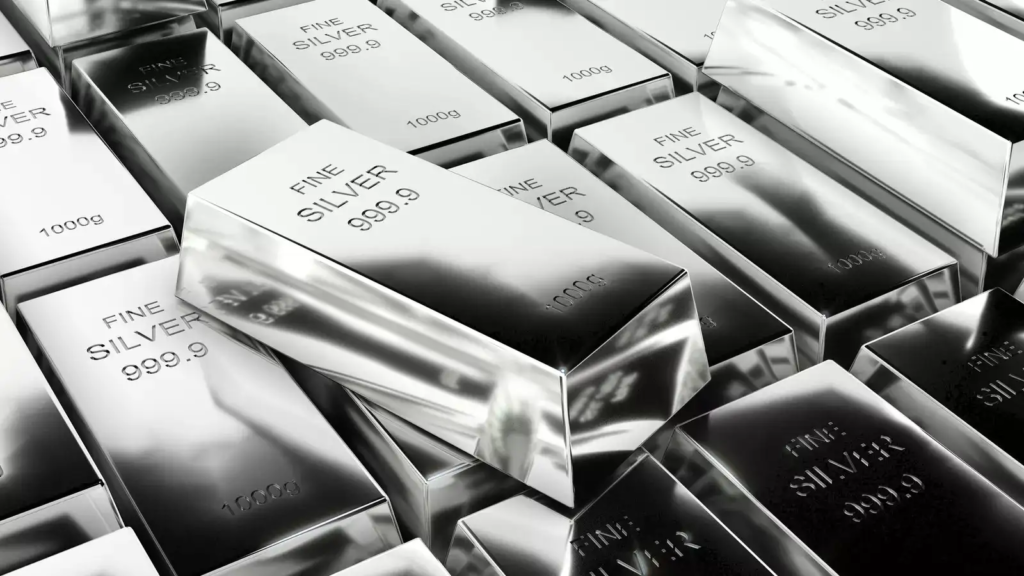
2025: The Year Silver Peaked
To understand where silver might be headed, we need to examine the extraordinary journey it’s already made. At the start of 2025, silver traded around $30 per ounce. By year’s end, it had shattered the $70 barrier, with brief climbs above $80 in late December. To be sure, this was by no means anything accidental, but a sustained rally thanks to fundamental shifts in supply, demand and geopolitics
The rally accelerated dramatically in the final months of 2025. Silver broke through its previous record highs in October, then continued climbing through November and December. By Christmas Eve, the metal was trading above $72, with platinum and gold also reaching historic levels in what became a broad precious metals rally.
What makes this movement particularly significant is its staying power. Unlike speculative bubbles that deflate quickly, silver’s ascent has been supported by tangible factors that show little sign of reversing in 2026.
The Forces Behind the Silver Rally
Several powerful trends played roles in lifting silver to record territory, and most remain firmly in place as we begin 2026.
Industrial Demand Reaches New Heights
Silver’s role as the most electrically conductive element on Earth has made it indispensable for the modern economy. The renewable energy transition, in particular, has created unprecedented demand. Solar panel production consumed an estimated 230 million ounces of silver in 2024, with projections suggesting this could exceed 300 million ounces annually by 2030. Advanced solar technologies require up to 50% more silver than traditional panels, intensifying this demand.
The electric vehicle revolution adds another layer of consumption. EVs use two to three times more silver than conventional cars, approximately 25 to 50 grams per vehicle, and global production is expected to more than double by decade’s end. When you add silver’s expanding use in AI data centres, 5G infrastructure and battery technologies, industrial applications now account for over half of global silver demand.
Supply Constraints Create a Perfect Storm
While demand accelerates, supply remains stubbornly constrained. Approximately 70% of silver comes as a byproduct of mining copper, lead, and zinc. This means rising silver prices alone won’t easily increase production. In other words, miners can’t simply “turn on” more silver supply without expanding operations for other metals.
The market has experienced supply deficits for five consecutive years, with global demand outpacing mine output by 115 to 120 million ounces in 2025 alone. Cumulatively, the world has consumed nearly 700 million ounces more than it produced over the past four years. Major producing countries like Mexico, Peru and China have faced regulatory hurdles, environmental restrictions, and declining ore grades that limit new project development.
Geopolitical Uncertainty and Monetary Shifts
The broader macroeconomic environment has amplified silver’s appeal as a safe-haven asset. Escalating geopolitical tensions, particularly U.S. sanctions on Venezuelan oil and ongoing Russia-Ukraine conflicts, drove investors toward tangible assets that could preserve value during turbulent times. The U.S. dollar depreciated approximately 11% in the first half of 2025, its steepest decline in over 50 years, prompting investors worldwide to seek alternatives.
Central banks reinforced this trend through unprecedented gold and silver purchases. In a landmark development, Russia and India added physical silver to their reserves, while Saudi Arabia made its first-ever purchase of a silver ETF. These sovereign buyers now view silver as both an industrial growth asset and a monetary hedge against currency debasement.
The Market Squeeze Factor
A unique supply squeeze amplified silver’s rally in 2025. Early speculation about potential U.S. tariffs on silver led to metal flowing into New York vaults, and drained available stocks in London, the dominant spot trading hub. When demand spiked during the Indian festive season in October, the market seized up dramatically. Borrowing costs for silver surged to record levels as more than 100 million ounces flowed into exchange-traded funds backed by physical bullion.
The U.S. designation of silver as a critical mineral in November further tightened market psychology, with traders monitoring potential tariff implications. Unlike gold, silver’s thinner market, with daily turnover and inventories far smaller, means liquidity can evaporate quickly, leading to sharp price movements.
What to Expect in 2026
As we look ahead, multiple forecasts point to continued strength in silver prices, though projections vary significantly.
Conservative estimates from major financial institutions suggest silver could trade in the $42 to $65 range through 2026, with some analysts projecting an average around $56. More aggressive forecasts see potential for $77 to $88 per ounce, particularly if inflation expectations rise or renewable infrastructure investment accelerates beyond current projections.
Minutes from the Federal Reserve’s December meeting revealed growing openness to interest rate cuts if inflation continues moderating, though policymakers remain divided on timing and magnitude. Lower interest rates typically benefit precious metals, which don’t pay interest but gain appeal when the opportunity cost of holding them declines.
The fundamental picture remains supportive. Industrial demand shows no signs of slowing, supply constraints persist, and the geopolitical landscape continues favouring tangible assets. Silver’s dual nature (it serves both as an industrial commodity and a monetary hedge) positions it uniquely to benefit from economic growth and uncertainty alike.
Is It Too Late to Buy?
After such a dramatic rally, potential investors naturally wonder whether they’ve missed the opportunity. History suggests otherwise. During silver’s previous bull cycle from 2009 to 2011, the metal doubled again after breaking through its prior highs. Today’s fundamentals, particularly the structural nature of industrial demand growth, appear stronger than during previous rallies.
Market indicators show silver trading in overbought territory, with technical measures well above levels that typically signal near-term corrections. However, in strong bull markets, assets can remain overbought for extended periods. Rather than trying to time a perfect entry point, which often costs more in missed opportunities, many investors favour a disciplined approach of building positions gradually over time.
How to Invest in Silver
For those considering silver exposure in 2026, several pathways exist, each with distinct characteristics:
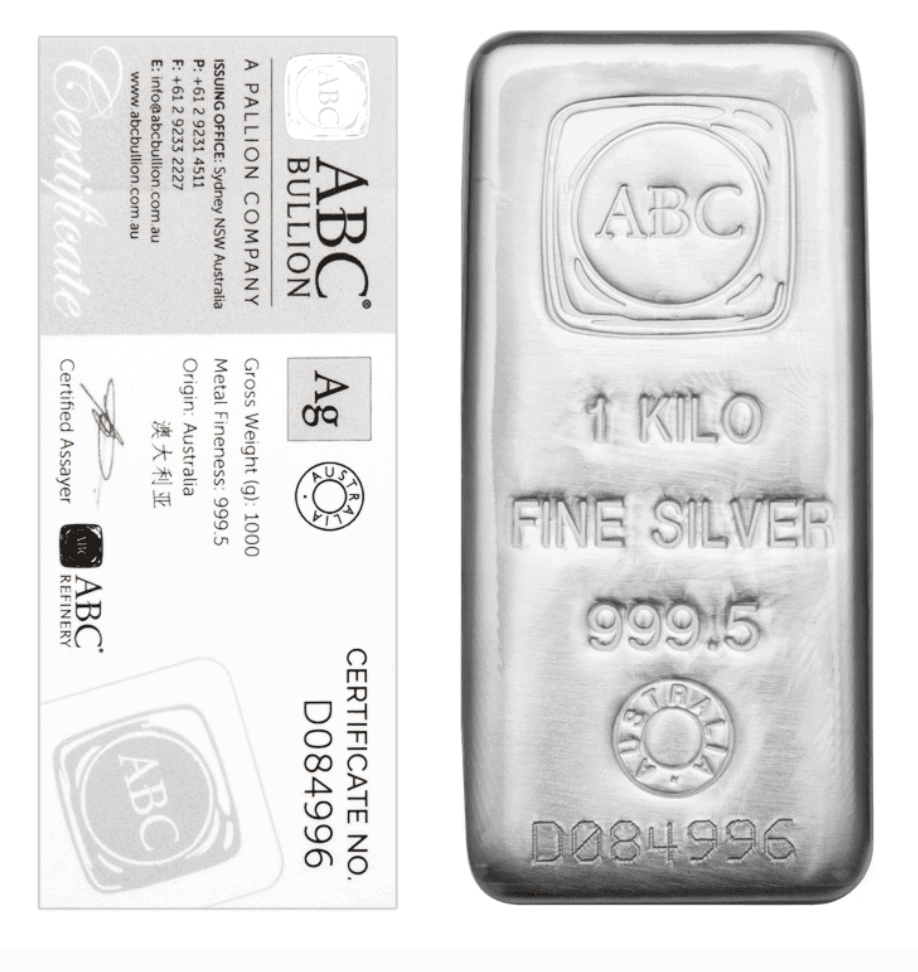
Physical silver through coins or bullion offers tangible ownership and psychological satisfaction. U.S. dealers and online platforms provide access to everything from pre-1964 coins (containing about 90% silver) to bars of various sizes. The main considerations include storage security, insurance costs, and potentially wider buy-sell spreads compared to financial instruments.
Exchange-traded funds like the iShares Silver Trust or abrdn Physical Silver Shares ETF provide exposure to silver prices without physical possession. These offer superior liquidity and you can buy or sell during market hours at transparent prices, and eliminate storage concerns. Expense ratios typically range from 0.30% to 0.50% annually.
Silver mining stocks offer leveraged exposure to silver prices, as miners’ profits can rise faster than the metal itself when prices increase. Companies can also grow production over time, creating an additional return pathway. However, individual mining stocks carry company-specific risks, requiring careful analysis of management quality, reserve levels, and operational efficiency.
Mining ETFs like the Global X Silver Miners ETF provide diversified exposure to multiple mining companies, reducing single-company risk while maintaining leverage to silver prices. These funds experienced significant volatility in 2025 but offer a middle ground for investors seeking more than direct metal exposure without concentrating in individual stocks.
Silver futures provide high leverage but carry substantial risk and complexity, making them generally unsuitable for most individual investors.
Important Considerations
Before investing in silver, several critical factors deserve attention:
Silver remains inherently volatile, particularly over short timeframes. Price swings of 5-10% in a single day aren’t uncommon during periods of market stress. This volatility can create opportunities but also requires emotional discipline and appropriate position sizing.
Unlike stocks or bonds, silver generates no income. Your returns depend entirely on price appreciation, meaning silver works best as part of a diversified portfolio rather than a core holding.
Tax treatment varies by jurisdiction and investment vehicle. In many countries, physical precious metals face different tax rules than securities, potentially affecting after-tax returns.
Market liquidity, while generally good for mainstream products like major ETFs, can thin during extreme market conditions. Physical silver particularly can face wider bid-ask spreads when markets are stressed.
As with any investment, silver should be approached thoughtfully, sized appropriately within your broader portfolio, and aligned with your individual risk tolerance and financial goals.
Disclaimer: This article is for informational purposes only and does not constitute financial advice. Silver prices are highly volatile and can result in significant losses as well as gains. Past performance does not guarantee future results. Before investing in silver or any commodity, consult with a qualified financial advisor who understands your personal financial situation, risk tolerance, and investment objectives. The author and publisher are not responsible for any financial decisions made based on this information.