Across Nigeria’s cities, small-scale food vendors are transforming traditional cooking into digital-age goldmines. And they’re doing it with just great food and the right food delivery apps.
Nigeria’s Explosive Food Market
According to the National Bureau of Statistics, in the first half of 2023 alone, Nigerians spent over ₦60 trillion ($43.5 billion) on food and household items. Nigerian households allocate nearly 60% of their income to food, the highest proportion globally. More revealing still, eating at restaurants and food vendors constitutes approximately 20% of household spending. This behavioural pattern creates a massive addressable market for food delivery services that is projected to grow from $834.7 million currently to between $2 billion and $3 billion by 2032.
The infrastructure supporting this growth has matured rapidly. Digital payment adoption surged, with cash transactions on platforms like Glovo dropping from 88% in 2021 to just 39% today, a 55% decline in just three years. This shift toward cashless transactions reduces friction, speeds up deliveries, and makes scaling far easier for both vendors and platforms.
The convergence of smartphone penetration, improved logistics and changing consumer behaviour has created perfect conditions for explosive growth. Urban Nigerians, particularly in Lagos, Abuja, and Port Harcourt, increasingly value convenience and are willing to pay premium prices for fast, reliable food delivery. The stage is set—and enterprising vendors are seizing the moment.
The Women Who Cooked Their Way to Billions
Amoke Odukoya
Amoke Odukoya’s journey began in Araromi, Oyo State, where she learned to cook from her mother, a local food vendor. In 1999, she apprenticed under her elder sister, Saudi Alamala, a respected food vendor in Bariga, Lagos. There, she spent years perfecting her craft before launching her own venture.
When Odukoya opened her first shop at Bawala in Pedro in 2015, ambition wasn’t her primary driver. “I didn’t open the shop to make money,” she revealed in a 2023 interview with City People Magazine. She just wanted to cook. “I enjoy it, and even today, I still cook despite being the boss.”
Growth was initially slow. It took three years before she could afford to expand beyond that first location. But between 2018 and 2023, momentum accelerated dramatically; she opened five additional branches and brought her total to seven locations across Lagos, including a coveted spot in Ikoyi.
The real transformation, however, came when Odukoya joined Chowdeck as one of the platform’s first 100 vendors. Before the platform, she described her stores as “jam-packed,” with “endless queues, frustrated customers and overwhelmed staff.” After joining Chowdeck, foot traffic to physical locations decreased while revenues soared. While counterintuitive, this turned out to be a powerful dynamic.
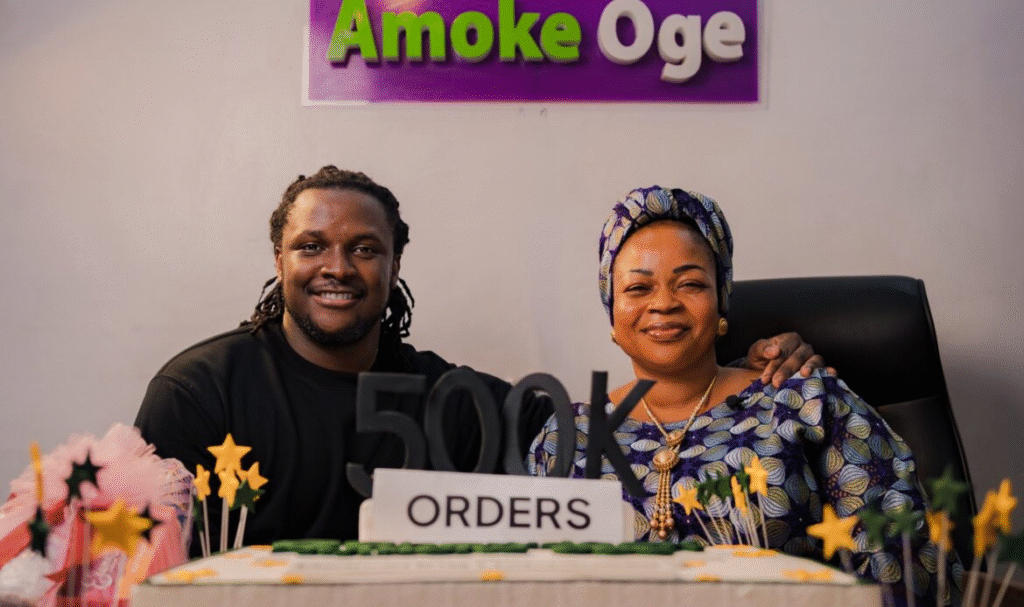
By May 2025, Amoke Oge had completed over 500,000 deliveries on Chowdeck alone, with an average order value of ₦4,600. The mathematics is straightforward: 500,000 deliveries multiplied by ₦4,600 equals ₦2.3 billion in revenue. This milestone made Amoke Oge the first female-led food business on Chowdeck to reach half a million deliveries.
Femi Aluko, Chowdeck’s CEO and co-founder, personally visited to congratulate her. “Amoke was one of our first 100 restaurants, and this is great news for us,” he noted by way of acknowledging that the platform’s success is inextricably linked to the success of vendors like Odukoya.
Korede Spaghetti
While Amoke Oge serves traditional Nigerian cuisine, Korede Spaghetti represents another facet of the delivery revolution. Operating from the University of Lagos (UNILAG), this vendor achieved a remarkable milestone on May 13, 2025: ₦1 billion in total food orders processed through Chowdeck.
For a business rooted in campus food culture, reaching such heights required overcoming significant logistics challenges. According to Korede, Chowdeck solved “80% of our logistics problems,” and enabled the business to scale beyond the university’s walls to reach customers across Lagos who might never have visited UNILAG.
The stories of these two women show that with the right platform infrastructure, culinary skill and consistency can generate wealth that was previously reserved for corporate executives or tech entrepreneurs. The barriers to entry remain low, most of what is needed is cooking ability, basic capital, and access to a delivery platform. While the ceiling has been blown wide open.
The Platforms Behind these Women
Chowdeck
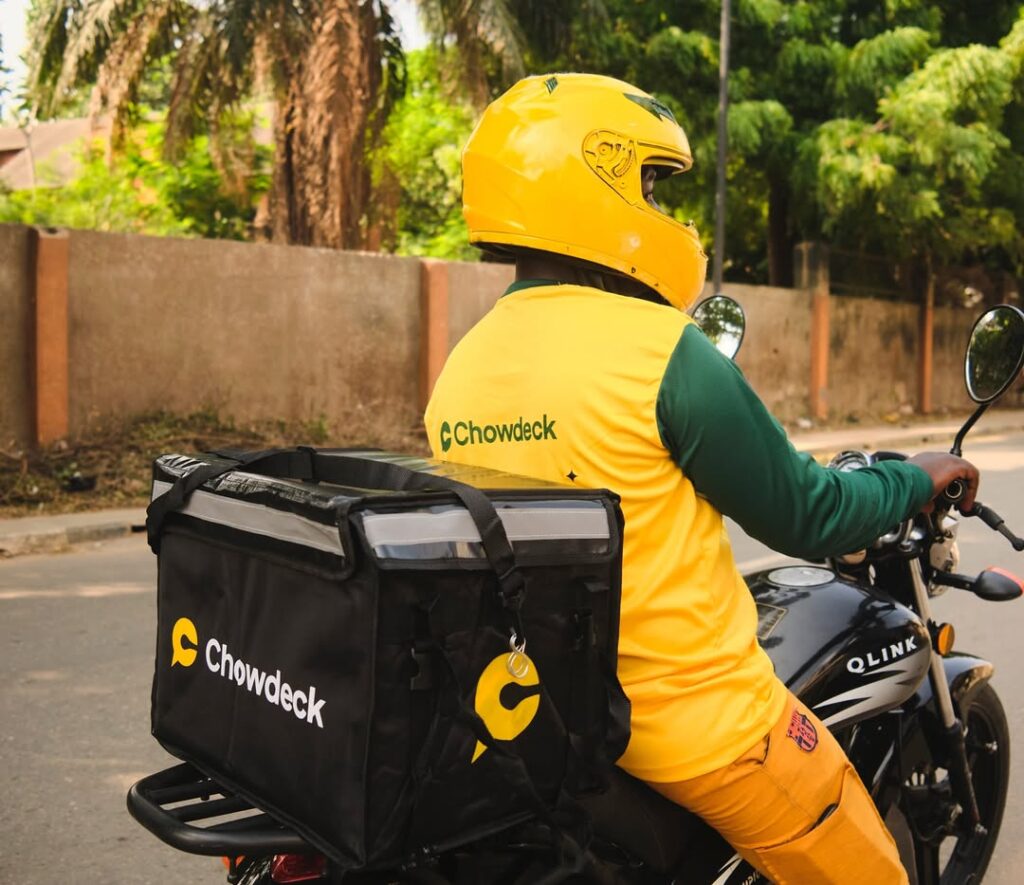
Chowdeck’s founding story begins in Dubai. Femi Aluko, then a principal engineer at Paystack (acquired by Stripe), was on a work trip when he experienced something transformative: food deliveries that arrived within 30 minutes, accompanied by proactive customer service. “Ordering food in Nigeria would usually take one or two hours,” he recalled. “But each time I ordered food during my three-month stay in Dubai, I consistently received it on time. If there were any delays, the restaurant would call me to apologize.”
That experience sparked a question: could similar service quality be replicated in Nigeria?
In October 2021, Aluko, alongside co-founders Olumide Ojo and Lanre Yusuf, launched Chowdeck. They began modestly, partnering with just two restaurants and operating a handful of delivery bikes. But the startup, backed by Y Combinator, quickly found product-market fit.
Growth has been explosive. From 319 users in its first month, Chowdeck surpassed 1 million registered users by October 2024, with over 100,000 active monthly. The platform crossed ₦1 billion in monthly gross merchandise value (GMV) for the first time in October 2023. By March 2024, that figure had doubled to ₦2.4 billion monthly. Across 2024, Chowdeck processed over ₦30 billion in total deliveries.
The platform now operates across eight Nigerian cities, including Lagos, Abuja, Ibadan, Port Harcourt, Ilorin, Benin City, Abeokuta, and Asaba, with Lagos generating approximately 80% of volumes. More than 3,000 riders service over 3,000 vendors, including exclusive partnerships with major chains like Chicken Republic.
How Chowdeck Works
Chowdeck’s strategic differentiation centres on sustainable unit economics. Unlike competitors who relied heavily on discounts to attract users, Chowdeck minimized promotional spending from day one. “We took the time to figure out the right economics for our delivery business, which is why we’re not big on offering unrealistic discounts,” Aluko explained. This discipline allowed the platform to target customers who prioritize speed and convenience over price. This reduced their target market to a profitable segment willing to pay for 30-minute deliveries.
The platform’s logistics rely on sophisticated systems: geotagging, diverse vehicle options (bicycles to motorbikes), automated demand forecasting and strict vendor regulations. Vendors must accept orders within five minutes or face cancellation and reduced priority, a policy that maintains service speed.
With a 24% take rate, Chowdeck generates revenue from vendor commissions, service fees, surge charges, and delivery fees. Between 2022 and 2023, revenues increased by 1,200%, according to Aluko. In April 2024, the company secured $2.5 million in seed funding from Y Combinator, Goodwater Capital, and notable founders including Paystack’s Shola Akinlade and Rappi’s Simon Borrero.
Riders on Chowdeck earn between ₦100,000 and ₦200,000 monthly, a salary that is three to five times Nigeria’s minimum wage, making it an attractive income source in a challenging economy.
For vendors seeking to sell on Chowdeck, registration is straightforward. Vendors must have a physical restaurant in one of Chowdeck’s operational cities. Prospective vendors download the Chowdeck Vendor App (available on Google Play Store and Apple App Store), register, and upload their menu. After submitting, Chowdeck reviews the application, sends a vendor contract, and activates the restaurant on the platform, typically within days.
Glovo
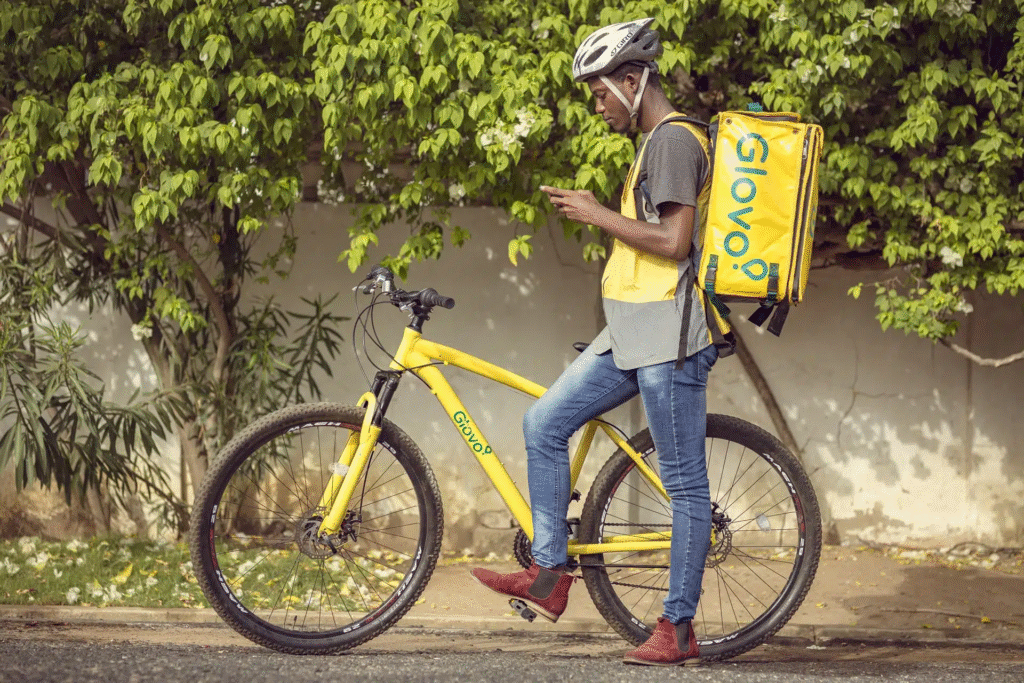
Glovo was founded in Barcelona in 2015 by Oscar Pierre and Sacha Michaud. It started with the founders personally delivering orders on bicycles. The company has since evolved into a $2.6 billion global platform operating in 25 markets. In 2022, German delivery giant Delivery Hero acquired Glovo, providing the capital for aggressive expansion.
Glovo entered Morocco in 2018 as its first African market and has since invested over €206 million ($220 million) on the continent, and now operates in six African countries. Nigeria, where Glovo launched in 2021, represents the company’s most ambitious African bet.
The numbers validate that ambition. Over 6,000 Nigerian vendors have generated ₦71 billion ($42 million) in revenue through Glovo since launch, or 13% of the 45,000 African businesses on the platform despite Nigeria being just one of six markets. The platform operates across 11 Nigerian cities, with Lagos accounting for over 70% of activity.
Glovo’s Reach
Glovo currently supports approximately 3,000 vendors and 2,000 active riders in Nigeria. The quick commerce segment, groceries and non-food retail is Glovo’s fastest-growing vertical, with GMV surging 76% year-over-year in 2024. Beyond food, 20% of users now purchase electronics, beauty products, and pharmaceuticals through Glovo.
In independent speed tests conducted in Lagos in June 2025 by Techcabal, Glovo outperformed competitors in both morning and evening deliveries, despite riders using bicycles rather than motorcycles. During a morning test, Glovo delivered in 20 minutes compared to Chowdeck’s 28 minutes. In an evening rush-hour test, Glovo completed delivery in 40 minutes, beating FoodCourt (50 minutes) and Chowdeck (61 minutes).
To register, vendors visit Glovo’s Partner registration portal and provide business details, including email, phone number, business name, and full address. Required documentation includes business registration certificates (CAC), NAFDAC registration for food businesses, tax identification numbers, and bank verification. Vendors then create comprehensive menus with pricing, define delivery zones, and configure payment options. Glovo typically reviews applications within 3-7 business days before granting access to the Partner Dashboard.
FoodCourt and Others
FoodCourt operates a different model, running its own dark kitchens with in-house delivery riders while also listing on platforms like Glovo and Chowdeck. This hybrid approach offers speed advantages during off-peak hours but can suffer from rider motivation issues during late shifts.
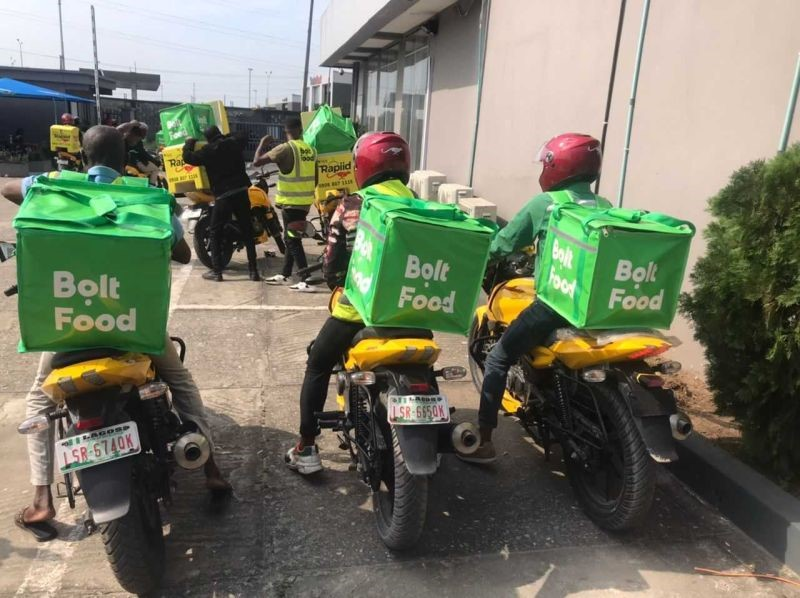
Other platforms include UrbanEats, Heyfood, MANO, Boltfood, Foodelo, etc. Many more others continue to enter the market, but Chowdeck and Glovo currently dominate Nigeria’s food delivery landscape, with Bolt Food and Jumia Food having exited the market by the end of 2023, citing challenging business conditions.
As Nigeria’s food delivery industry matures toward its projected $2-3 billion valuation by 2032, thousands more vendors will build substantial businesses by combining culinary excellence with platform leverage. For anyone with cooking skills, entrepreneurial drive, and a smartphone, the answer should be clear. The kitchen is open, the platforms are ready, and the market is hungry.