Which of my assets count as zakatable? What can you subtract? Is my pension zakatable? In short, how much zakat do I owe? Here are your answers.
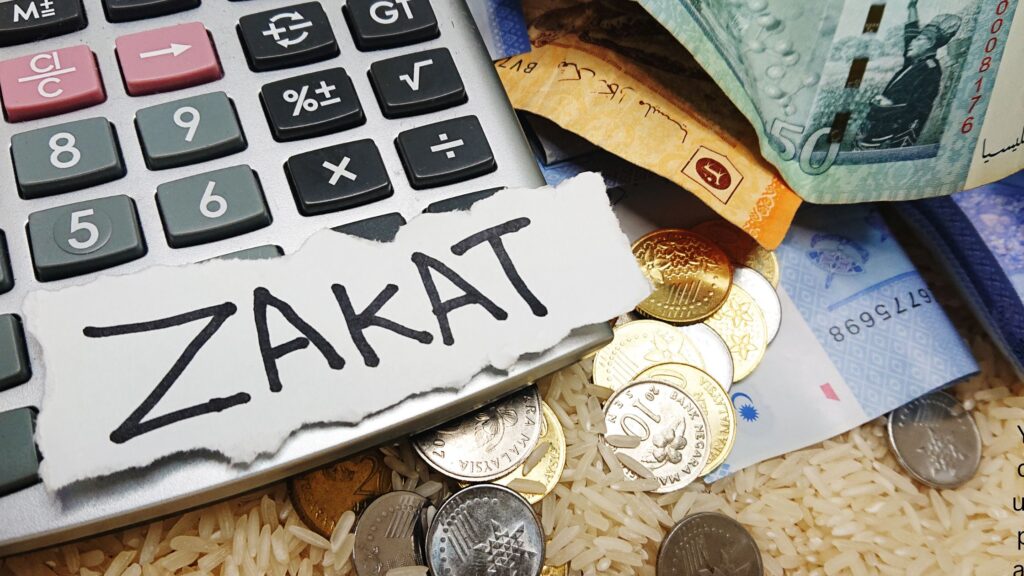
Step 1: Know the Threshold (Nisab)
Before you calculate anything, check whether you even owe Zakat. You only pay if your net wealth has stayed above the nisab, that is, the minimum threshold for a full lunar year. It is either calculated in terms of the wealth equivalent to either gold, that is, 85 gm of gold, or silver which, that is 595 gm of silver.
As of February 2026, the nisab in Nigeria, based on gold, was set at approximately ₦18,420,000 by the National Moonsighting Committee Nigeria. This figure is updated regularly as gold prices fluctuate. So be sure to check with a local Islamic authority or Imaanity’s Zakat calculator for the most current number before you start. It is free. To use it, you just need to sign up. You can save and track your Zakat calculations and you get personalized recommendations from time to time.
If your net wealth is below the nisab, you are not obligated to pay Zakat this year.
Step 2: Add Up Your Zakatable Assets
These are the categories of wealth that count toward your Zakat calculation:
1. Cash and liquid money All the money you have on hand, in your bank accounts, or that someone owes you and is expected to repay.
2. Savings and investment accounts Emergency funds, fixed savings, money market accounts, just about anything you’ve set aside count.
3. Gold and silver The full market value of your gold and silver holdings. Note: most scholars hold that gold worn daily as jewellery is exempt, while gold held as savings or investment is zakatable.
4. Business assets If you run a business, include your stock/inventory and cash held in the business. Equipment and property used in running the business (not for resale) are generally excluded.
5. Stocks and shares If you’re investing short-term, treat the full market value of your portfolio as zakatable. If you’re a long-term investor, you calculate based on the liquid assets held by each company you’ve invested in. Your broker or an Islamic finance adviser can help with this.
6. Rental income and investment income Profits, dividends, and rental income you’ve received are zakatable.
Cryptocurrency Coins like Bitcoin and Ethereum are zakatable at their current market value regardless of your intention.
Add all of the above together to get your total zakatable assets.
Step 3: Subtract Your Deductible Liabilities
Not everything you owe can be deducted; only debts and obligations that are actually due within the next 12 months. Here is what you can subtract:
- Debts that must be repaid within the next year
- Up to 12 months’ worth of instalments on longer-term loans
- Any overdue payments or arrears currently outstanding
Here is what you cannot deduct:
- Bills that aren’t due yet
- Long-term mortgage or student loan balances (only the portion due within 12 months)
- Interest payments (riba is not a valid deduction in Islamic finance)
Afterwards, subtract your eligible liabilities from your total assets to arrive at your net zakatable wealth.
Step 4: Apply the Formula
Once you have your net zakatable wealth, the calculation is simple:
(Total Zakatable Assets − Deductible Liabilities) × 2.5% = Zakat Due
That’s it.
A Worked Example in Naira
Let’s say this is your situation:
| Asset | Value |
|---|---|
| Bank accounts and cash | ₦8,000,000 |
| Savings and investments | ₦6,000,000 |
| Gold (savings, not worn daily) | ₦3,500,000 |
| Business inventory | ₦5,000,000 |
| Stocks | ₦2,000,000 |
| Total Zakatable Assets | ₦24,500,000 |
Now deduct your eligible liabilities:
| Liability | Amount |
|---|---|
| Loan repayment due this year | ₦3,000,000 |
| Business credit due within 12 months | ₦1,500,000 |
| Total Deductible Liabilities | ₦4,500,000 |
Net Zakatable Wealth = ₦24,500,000 − ₦4,500,000 = ₦20,000,000
This is above the nisab, and has been for the past lunar year. So, your Zakat is due.
Zakat Due = ₦20,000,000 × 2.5% = ₦500,000
A Few Other Things to Keep In Mind
Your primary home is not zakatable. The house you live in is excluded entirely. Only investment properties (or properties you intend to sell) are included.
Pension funds are generally zakatable once you can access them. However, if your pension is locked and you cannot access it, most scholars hold that Zakat is not due until you receive it. If it’s accessible, then you should apply the standard 2.5% to the relevant portion.
When to pay is up to you, as long as a full lunar year has passed since your wealth reached the nisab. Many Muslims pay during Ramadan for the extra reward, but there’s no requirement to do so.
Now Let Imaanity’s Calculator Do the Maths
We’ve walked you through the logic, now let Imaanity’s free digital Zakat calculator do the maths for you in seconds. It covers cash, savings, gold, stocks, business assets, and more, so nothing gets missed.
It is free. To use it, you just need to sign up. You can save and track your Zakat calculations and you get personalized recommendations
→ Calculate your Zakat now at imaanity.com
Imaanity: An Evidence-Based Way to Pay Zakat
The distance between a charity’s stated mission and its actual impact is wider than donors know. An organization can be sincerely motivated, competently managed, and genuinely popular and still fail to produce meaningful change in the metrics that matter. Being diligent about paying your zakat means asking not just how much but to what effect. This has given rise to effective altruism and evidence-based giving.
Inspired by both, Imaanity is an evidence-based giving platform built on the principle that donors deserve to know whether their giving is actually working.
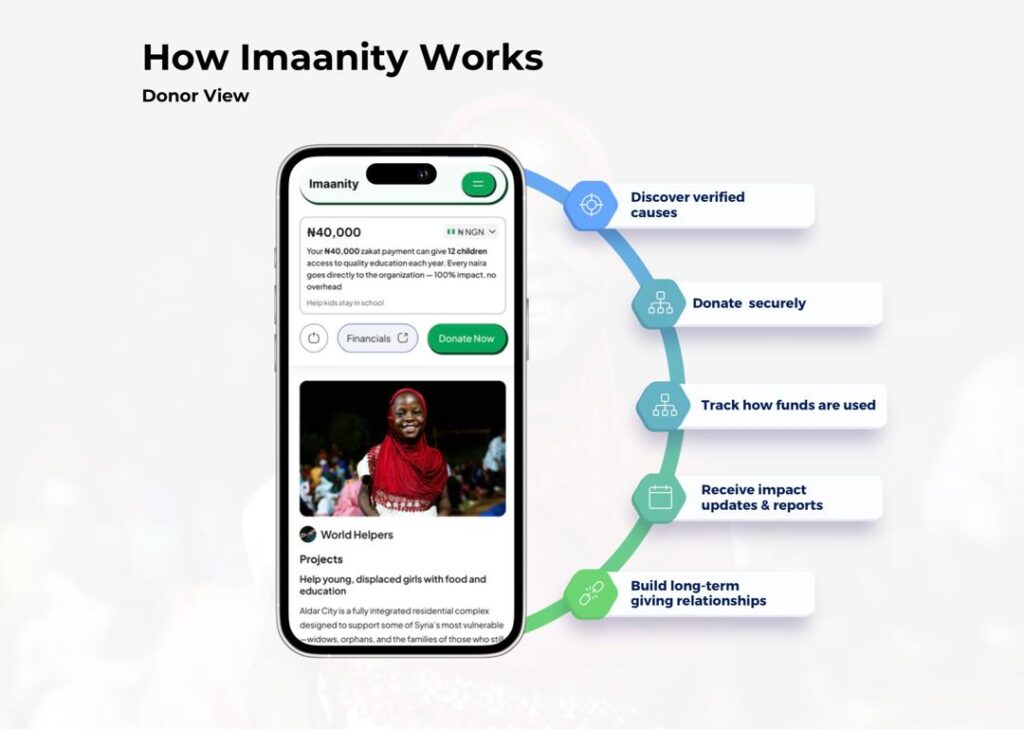
- Imaanity independently assesses NGO partners on the ground in Nigeria across the categories where need is most acute: poverty relief, healthcare, education, clean water, emergency response, and support for women, children, and families.
- Its digital system delivers allows donors to trace their giving from donation to delivery.
- It offers verified outcomes, not mere stories and anecdotes, as well as ongoing visibility over time.
- They cover operational costs independently. This way, they ensure that 100% of donated funds reach their partner organisations.
- They provide faith-aligned giving options like tithes and zakat. Imaanity.com’s digital Zakat calculator covers everything from liquid cash to illiquid assets to help you arrive at your precise obligation without guesswork or omission.
- They provide seamless and convenient payment options.
- Donors can direct their contributions to specific geographical locations of their choice instead of just dump them into undifferentiated pools.
- Donors can also track the impact of their giving in real time.
Visit imaanity.com to get started today.
→ Give your Zakat through Imaanity and track your impact in real time
FAQs
What is Zakat? Zakat is one of the five pillars of Islam. It is an obligatory annual almsgiving of 2.5% of qualifying wealth, paid by eligible Muslims to support those in need.
Why is Zakat paid? It purifies wealth and redistributes resources within the Muslim community.
Who is required to pay Zakat? Any sane, adult Muslim who is debt-free (or whose assets exceed immediate debts) and has possessed wealth above the nisab threshold for one complete lunar year.
When should I pay Zakat? Zakat becomes due after one complete lunar year of holding wealth above the nisab. Many Muslims choose Ramadan for the extra blessings, but you may pay whenever your personal Zakat year ends.
What is Zakat al-Fitr, and is it different from regular Zakat? Yes. Zakat al-Fitr (Fitrana) is a separate obligation paid during Ramadan before Eid prayers. It is due on every household member regardless of age or wealth and equals the cost of one meal per person.
Where can I pay Zakat in Nigeria? Options include local mosques, Islamic societies like Al-Habibiyyah Islamic Society and MPAC Nigeria, state Zakat boards, and online platforms such as Imaanity, Islamic Relief Worldwide, Muslim Aid, Zakat Foundation of America, and LaunchGood.
Who are the eight eligible Zakat recipients? As specified in Surah At-Tawbah (9:60): the poor, the needy, Zakat administrators, those whose hearts are to be reconciled, those in bondage, those in debt, those striving in the cause of Allah, and wayfarers.
Important Disclaimer
This guide provides general information about Zakat payment in Nigeria. For personal religious guidance, be sure to consult qualified Islamic scholars. For specific organizational information, we recommend you verify current programs and policies directly with each institution before making a donation.