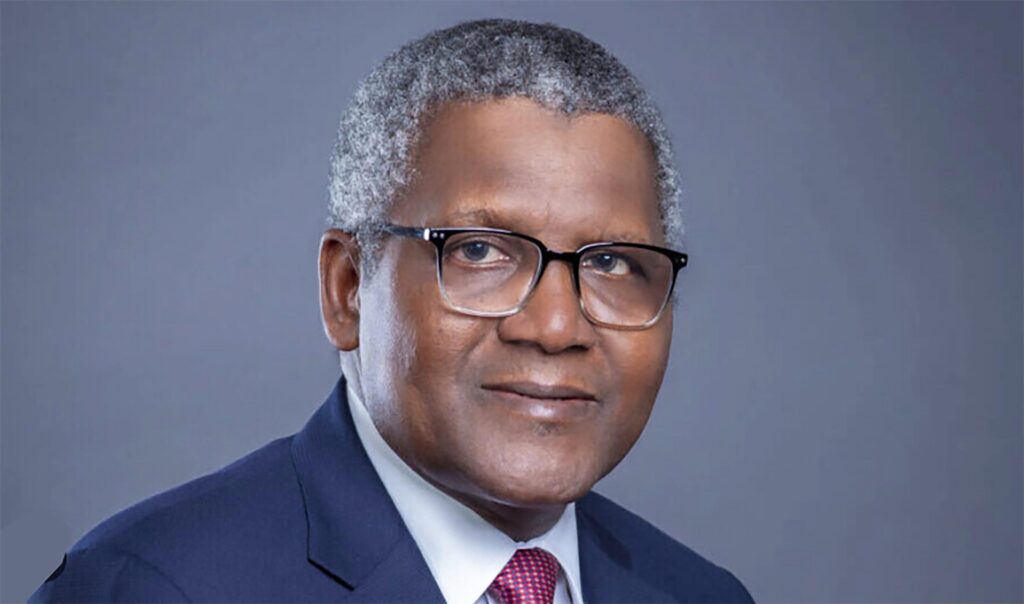
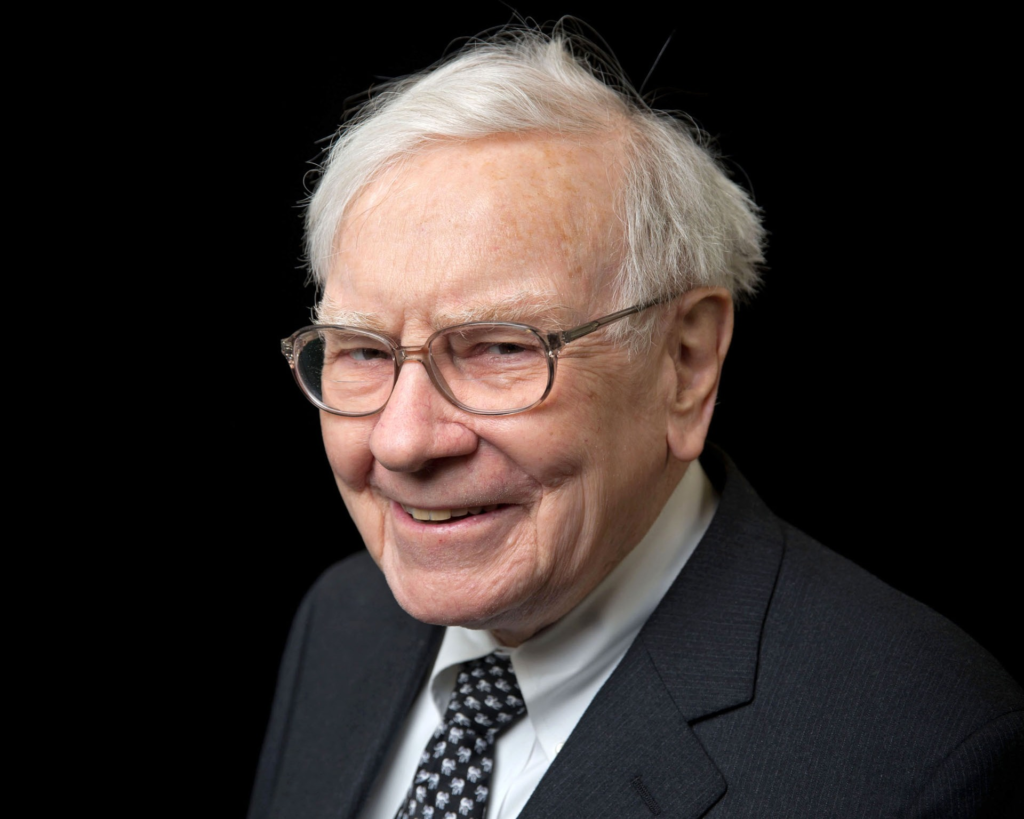
Warren Buffett, the Oracle of Omaha, as he’s known, didn’t build his $100+ billion fortune through luck or market timing. He did it by following principles that work whether you’re investing on Wall Street or the Nigerian Exchange.
Price and Value Are Not the Same
In 2008, as global markets collapsed and the S&P 500 plummeted 37%, Warren Buffett opened his letter to Berkshire Hathaway shareholders with a quote from his teacher, Benjamin Graham: “Price is what you pay; value is what you get.”
That year was brutal. Lehman Brothers had failed, fear gripped the markets and Berkshire’s book value dropped 9.6%. This was Buffett’s worst performance since taking over in 1965. But here’s the thing: while the broader market lost more than a third of its value, Berkshire lost less than a tenth. And while others panicked, Buffett deployed $8 billion in capital and invested $5 billion in Goldman Sachs and $3 billion in General Electric.
The lesson? Price and value aren’t the same thing, and the market will teach you this difference whether you’re ready or not.
Price bounces around based on fear, greed, and whatever mood controls the crowd. Value is what a business will actually produce in cash over time. When they split apart far enough, opportunity emerges. In November 2025, Nigerian investors learned this lesson first-hand when the NGX lost trillions in market value despite strong corporate earnings. The trigger wasn’t weak fundamentals, but fear over a proposed 30% capital gains tax and global geopolitical tensions.
Yet beneath the panic, most listed companies were still reporting solid balance sheets and healthy cash flows. That disconnect between performance and perception is exactly where value investors find their opportunities.
Consider Zenith Bank during that November selloff. With a trailing twelve-month earnings per share of N25.15 and a share price of N54, its P/E ratio stood at 2.15x, which was well below the banking sector average of 2.82x. Its price-to-book ratio of 0.61 and price-to-sales ratio of 0.59 were similarly below sector averages of 0.93 and 0.70, respectively. The bank wasn’t performing poorly. The market was simply repricing everything out of fear. For those who understood the difference between price and value, it was a buying opportunity.
Be Greedy When Others Are Fearful
“Be fearful when others are greedy, and greedy when others are fearful.” This is one of Buffett’s most famous phrases. It’s a battle-tested strategy that has made him billions.
His 1966 letter to partners demonstrates this principle in action. That year, the Dow fell 15.6% while Buffett’s fund gained 20.4%, or a 36-point advantage he called the partnership’s best relative performance. What happened? Buffett had bought businesses trading below their intrinsic value, so when the market tanked, his investments held up because their underlying value hadn’t changed. Only the prices had.
Fast forward to the 2008 financial crisis. As credit markets froze and banks failed, Buffett saw quality businesses selling at what he called “ridiculous prices.” His Goldman Sachs investment paid 10% annually on preferred shares, plus warrants to buy common stock. When he exited in 2013, his total profit was $3.7 billion. His General Electric investment netted $1.5 billion.
“Whether we’re talking about socks or stocks, I like buying quality merchandise when it is marked down,” Buffett wrote in 2008.
These weren’t gambles. Buffett understood that these companies would survive and that their temporary troubles didn’t reflect their long-term ability to generate cash. Their stock prices had simply fallen way below their value.
Nigerian investors saw a similar opportunity in November 2025 when the banking sector lost over N1.6 trillion in market capitalization despite strong earnings. For those who could see past the fear, it was a chance to buy quality banks at discount prices.
Invest for the Long Term, the Really Long Term
When Buffett says his favourite holding period is “forever,” he means it. Berkshire Hathaway has held Coca-Cola stock since 1988 and American Express since the 1960s. These aren’t his longest positions because he forgot about them, they’re his longest because they keep creating value.
In his 1996 letter to shareholders, Buffett wrote: “Your goal as an investor should simply be to purchase, at a rational price, a part interest in an easily-understandable business whose earnings are virtually certain to be materially higher 5, 10, and 20 years from now.” He added: “If you aren’t thinking about owning a stock for 10 years, don’t even think about owning it for 10 minutes.”
This patience allows compound interest to work its magic. Think of it this way: Good businesses increase in value over time. By staying invested, you give that value time to compound. You also avoid the transaction costs and taxes that come with frequent trading.
Long-term investing also tends to be less risky because you have more time to recover from downturns. The Nigerian market’s 51.2% return in 2025 rewarded those who held through the volatility, not those who traded in and out trying to time every move.
Stay Within Your Circle of Competence
Buffett learned early from Benjamin Graham at Columbia University in the early 1950s that markets misprice things constantly because most investors chase what’s moving instead of what’s cheap. But that doesn’t mean you should invest in everything that looks cheap.
“What an investor needs is the ability to correctly evaluate selected businesses,” Buffett wrote in 1997. “Note that word ‘selected’: You don’t have to be an expert on every company, or even many. You only have to be able to evaluate companies within your circle of competence. The size of that circle is not very important; knowing its boundaries, however, is vital.”
Buffett himself stayed skeptical of tech stocks for decades because he felt he didn’t understand them. It wasn’t until May 2016 that he bought nearly 10 million Apple shares, making his first major foray into technology. He waited until he truly understood the business model.
For Nigerian investors, this means focusing on industries you know. If you work in telecommunications, you might understand MTN Nigeria better than most. If you’re in consumer goods, you have insights into companies like Nestle Nigeria or Nigerian Breweries. Use that knowledge.
Buffett’s approach is refreshingly simple: “Never invest in a business you cannot understand.”
Look for Companies with a Moat
Few businesses can sustain high returns on capital over time because competition erodes margins. The ones that can, Buffett explains, have what he calls a “moat”, a protective barrier against rivals.
“A truly great business must have an enduring ‘moat’ that protects excellent returns on invested capital,” he wrote in 2008. “The dynamics of capitalism guarantee that competitors will repeatedly assault any business ‘castle’ that is earning high returns. Therefore, a formidable barrier such as a company’s being the low cost producer (GEICO, Costco) or possessing a powerful world-wide brand (Coca-Cola, Gillette, American Express) is essential for sustained success.”
In Nigeria, think about companies with strong competitive advantages. Dangote Cement dominates its market through scale and distribution. Guinness Nigeria benefits from powerful brands. Banks like Zenith and GTBank have built trust and extensive networks that take decades to replicate.
Buffett cautions against companies that must constantly rebuild their moat. As he put it in 2008: “A moat that must be continuously rebuilt will eventually be no moat at all.” Be sure to look for businesses with advantages that compound over time, not erode.
Don’t Try to Time the Market
In 1995, Buffett wrote: “We try to price, rather than time, purchases. In our view, it is folly to forego buying shares in an outstanding business whose long-term future is predictable, because of short-term worries about an economy or a stock market that we know to be unpredictable. Why scrap an informed decision because of an uninformed guess?”
He added: “We ignore political and economic forecasts, which are an expensive distraction for many investors and businessmen. Indeed, we have usually made our best purchases when apprehensions about some macro event were at a peak.”
Think about the Nigerian investors who sat out 2025 waiting for the “perfect” time to buy. They missed a 51% return. Meanwhile, those who focused on finding quality companies at reasonable prices participated in one of the market’s best years in nearly two decades.
Buffett’s approach is simple: If you find a good business at a fair price, buy it. Don’t wait for the economy to look perfect or for the market to signal all-clear. Those conditions rarely arrive.
The Margin of Safety Matters
In the final chapter of The Intelligent Investor, Benjamin Graham wrote: “Confronted with a challenge to distil the secret of sound investment into three words, we venture the motto, Margin of Safety.”
Buffett read those words 42 years before writing in 1991: “I still think those are the right three words.”
A margin of safety means buying at a price low enough that even if your analysis is partially wrong, you’re still protected. If you calculate a stock is worth N100 per share, don’t pay N100. Pay N70 or N80 and give yourself room for error.
This principle protected Buffett in 2008 and has guided every investment decision since. It should guide yours too, especially in a market as dynamic as Nigeria’s. As Buffett himself once said: “The stock market is a device for transferring money from the impatient to the patient.”